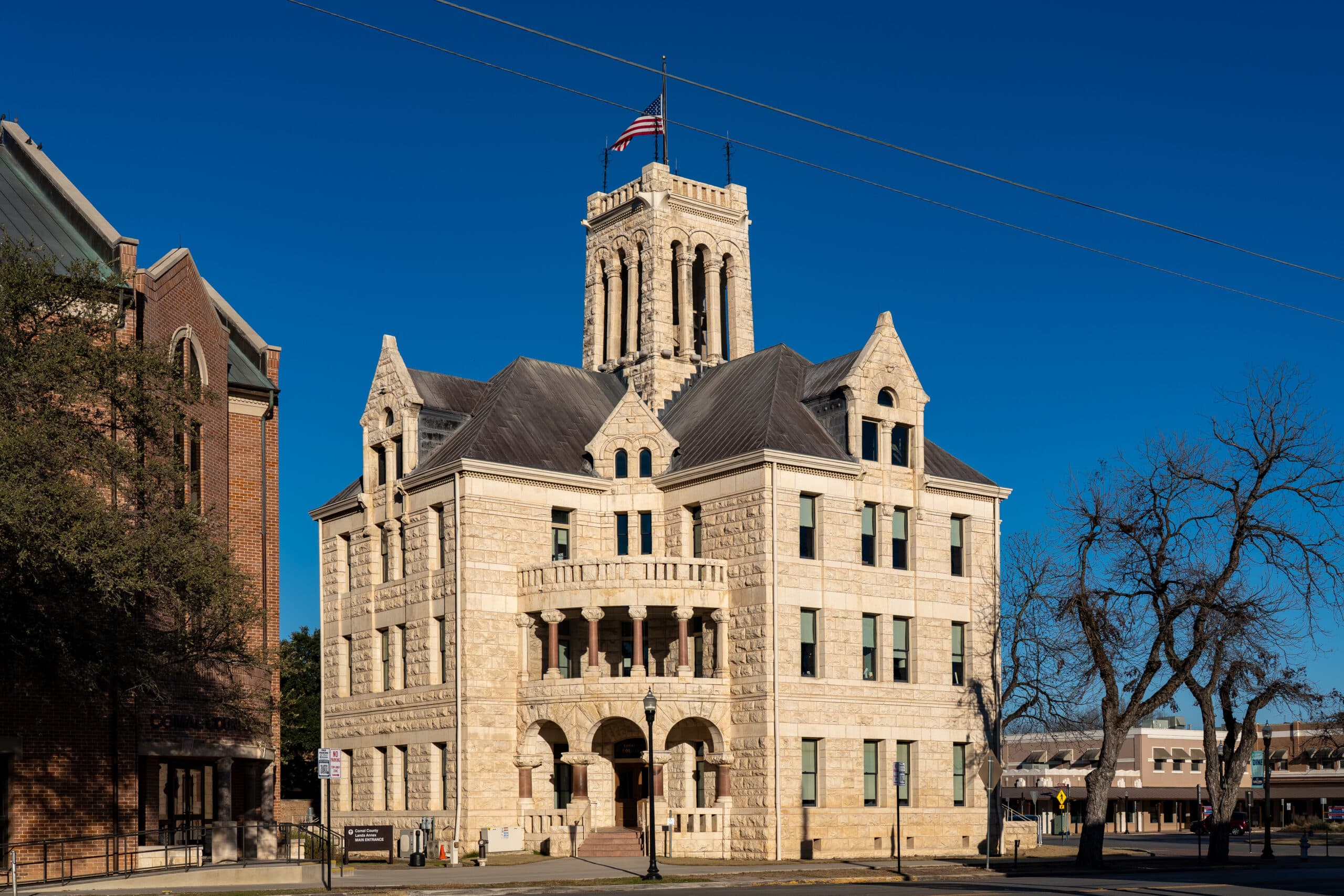
Comal County Beekeeping Ag Exemption
The Comal County CAD requires a beekeeping applicant to file a plan, and it needs to include the acreage used for beekeeping including any leases or hive management contracts. When you work with us, we provide the beekeeping management lease you'll need for your application. The count starts at six hives for the first five acres and climbs with your acreage. The land still needs its agricultural history, with agriculture as its principal use, and the form is due April 30. We put the bees on your land, work them through the season, and keep the records your application rests on.
See if your land qualifies →Degree of intensity
Comal County CAD's Hive Count Climbs From Six to Thirteen
Comal County CAD prints this schedule in its guidelines. Six hives cover the first five acres, and it adds one more hive for every two acres after that, all the way up to twenty acres. Not every acre you own counts toward that total. Where there's a house on the tract, the homesite comes out first, meaning the land the house sits on, and the district sets how much. Work with the Comal County CAD to determine the acreage eligible for ag valuation before you file.
5 to 20 acresthe acreage band this applies toSet by state law, not by Comal Appraisal District. Texas Tax Code §23.51
First 5 acres: 6 hives, per Tex. Agric. Code §131.001's apiary definition. Roughly one additional hive per 2 acres thereafter.
Comal Appraisal District's standard, boiled down.
| Acres | Hives |
|---|---|
| 5 to 6.99 | 6 |
| 7 to 8.99 | 7 |
| 9 to 10.99 | 8 |
| 11 to 12.99 | 9 |
| 13 to 14.99 | 10 |
| 15 to 16.99 | 11 |
| 17 to 18.99 | 12 |
| 19 to 20 | 13 |
The rest of the plan
What Else Comal County CAD Requires
The Comal County CAD requires a beekeeping plan, and the hive count is one part of it. Here's the rest. The district appraises each parcel on its own, so check these against your place before you file.
- The agricultural history the land needs before it can qualify
- Five of the seven preceding years. Intensity isn't tested in those years.
- A stricter history test inside a city's boundaries
- Continuous agricultural use for the preceding five years, not five of seven.
- What has to be true on January 1
- Agricultural use, or the owner shows primary intent for the year.
- How long the hives stay, and what keeps them qualifying
- A bulk of the calendar year, active and kept alive. Flowering plants where vegetation is limited.
- How much land comes out for the homesite
- 1/2 acre, adjustable, taken out before the beekeeping acreage is counted.†Our call with Comal Appraisal District, July 13, 2026
- The beekeeping plan filed with the application
- Bee type, hive count, a map of hives and forage, a marketing plan, acreage including leases, migratory habits.
- Applying on a lease, and what the lease has to say
- A copy filed with the application, giving the use, acres, duration and both signatures.
- Rearing queens narrows the land that qualifies
- Only the land directly under and between the hives qualifies.
- Comal's own Apiary land class, and what it is valued at
- Set from voluntary surveys, currently $548 an acre.†Our call with Comal Appraisal District, July 13, 2026
- What taking the land back out of ag use costs
- Change the land to a non-agricultural use and the tax difference for the three preceding years comes back due.Texas Tax Code §23.55(a), as amended by Acts 2019, 86th Leg., R.S., Ch. 1361 (H.B. 1743), Sec. 1, eff. September 1, 2019
- Whether the rollback carries interest, as the statute has read since 2019
- No interest is added to it. Penalty and interest attach only if the bill itself goes unpaid past its due date.Texas Tax Code §23.55(a) and §23.55(e), as amended by Acts 2019, 86th Leg., R.S., Ch. 1361 (H.B. 1743), Sec. 1, eff. September 1, 2019
- What a sale does, with the agricultural use continuing
- A sale isn't a change of use, so the rollback doesn't follow. Keeping the valuation is separate, and it's on the buyer to reapply.Texas Tax Code §23.55(a) and §23.54(e)
This lists what Comal Appraisal District puts in writing, plus what its staff told us when we asked. For anything it doesn't cover, call the district office.
Comal County CAD Counts the Land You Lease for the Bees
The required beekeeping plan has seven key requirements. Comal County CAD requires the type of bees, the number of hives, a map showing the hives and the plant life, a list of the vegetation feeding them, a marketing plan, the acreage used for beekeeping including leases, and a note on the bees' migratory habits. Our bees don't migrate. The hives we set on your land stay on your land.
The lease line is the one that matters most here. A managed beekeeping agreement is the document the district requires filed, and it should state the kind of agricultural use, the number of acres, the duration, and the names and signatures of both parties. Comal County CAD takes the state 1-d-1 application and requires its own supplement alongside it. Both are due April 30, and a late one still gets looked at up to roll certification, at a 10 percent penalty.
The land has to be in agricultural use on January 1. Where that use isn't evident, the district puts the burden on the owner to demonstrate a primary intent to run the place agriculturally for the bulk calendar year, and a signed agreement is that kind of evidence. So an agreement in place before the year starts can support the tax year even where the colonies land a little after January 1. None of that happens automatically. You have to show the district the intent, and the hives still have to sit on the property for a bulk of the calendar year. Ask the district what it will take as evidence on your parcel first.
One of those seven requirements is a list of every plant on the place intended to support the hive. We put that list together for you. We walk the property before a hive goes on it and record what blooms and when. On a Comal County place that usually runs from spring wildflowers through mesquite into early summer, then fall goldenrod and the asters that carry a colony into winter. Our what blooms when rundown walks that calendar month by month. Where hives sit in an area with limited vegetation that needs pollinating, the district requires flowering plants be planted to support them, and whether that reaches your place is a question the walk answers.
The district's appraisers check the properties that carry the valuation. They work from aerial imagery or drive by, and where the use can't be made out from the road the district sends a letter asking for access onto the property. Not answering that can cost the valuation, bring on the rollback penalty, or both. The guidelines call those inspections routine and random, and how often one comes is a question for the office.
We keep records for every inspection to help support your claim of agricultural productivity. Every visit to your hives goes into Outlaw Hideout, the app we run for the landowners we manage, and you can pull a report out of it to take to the county. It won't satisfy the five-of-seven history on its own, though. The land has to meet that test in its own right.
On a smaller Comal County tract, watch the homesite. The land under and around the house is cut from your total acreage to determine your eligible acreage, which determines the number of hives you'll need to run. A homestead claim can take more than you'd expect. Texas Tax Code 11.13 lets an owner claim the house and up to twenty acres, and where a filing names that much, the district may treat that amount as the residential area and tax it at market value. That can pull the ag-eligible acreage toward the five-acre floor or under it. Size the tract with the homesite out first, and settle the carve-out with the district before you count what's left for hives.
Questions Comal County Landowners Ask
Does keeping bees for sale change how much of my land qualifies?
Only to a queen apiary, which Comal County CAD defines as one rearing or keeping queens for sale, barter or exchange. On that operation only the land directly under and between the hives qualifies. We don't raise queens on the properties we manage. The bees there are for pollination and honey, so the regular acreage schedule is what your tract is measured against.
Do nucleus colonies count toward the hive count?
Comal County CAD's guidelines count hives and don't say whether a nuc is one. Its glossary carries the Agriculture Code apiary definition, which mentions colonies or nuclei, without tying that to what gets counted. We put standard 10-frame hives on the land we manage, so your application shows full colonies and the question doesn't come up.
I'm buying Comal County land that already has an ag valuation. Do I reapply?
Yes. A change in ownership is one of the reasons Comal County CAD requires a reapplication, and the district sends the owner a letter asking for one. The valuation stays on the property until the end of that year. If the application isn't back by then, the district takes the valuation off.
Does a city line change the history I have to show?
It can. Comal County CAD holds land inside a city's boundaries to a harder test. Land inside one has to have been devoted principally to agricultural use continuously through the preceding five years, rather than five out of seven. It applies wherever a city line runs, and a line isn't always where you'd guess. Ask Comal County CAD where your parcel falls before you put money into hives.
Comal County CAD runs its own Apiary land class. Is that just a tax break for setting boxes out?
No. The hives have to be active, kept alive and actively maintained, and the district checks. Texas law counts keeping bees for pollination or for human food as agriculture, at Section 23.51(2), and land in the Apiary class is appraised on what it produces rather than what a buyer would pay. A yard nobody works fails on the district's own terms.
The document that governs
Comal County CAD's Open Space Guidelines and Standards
Comal County CAD's Agricultural Advisory Board reviews these guidelines with the district every year. The beekeeping standard sits in the section on types of agricultural operations, and the general sections around it carry the five-of-seven history, the principal-use test and April 30. The five-to-twenty-acre band a bee tract has to fall inside is state law, at Texas Tax Code 23.51(2).
We checked this document on July 12, 2026. The district's copy governs anything it covers, so confirm the details that decide your application with their office.
- District
- Comal Appraisal District
- Phone
- (830) 625-8597
- Address
- 900 S Seguin Ave, New Braunfels, TX 78130
- [email protected]
- Application form
- Form 50-129 (1-d-1 open-space application)
The Other Eleven Counties We Serve
See What Your Comal County Acreage Needs
Everyone who works a hive for us has come up through the Texas Master Beekeeper Program, Apprentice at the least, and our apiaries are registered with the Texas Apiary Inspection Service. The plan and the district's supplement are what your application stands on. Tell us the tract and the tax year, and we'll put both together with you before April 30.
Talk to us about your land →