Forage
Goldenrod and Bees in Central Texas
Goldenrod is among the last and heaviest flows of the Central Texas fall. Its dense late pollen builds the winter bees that carry a colony to spring, and we leave the honey on as winter feed.
The Central Texas forage season runs from January into November. That’s a longer stretch than the books written for northern bees account for. It also doesn’t run even. It comes in waves. An early start in late winter, a hard peak in spring, a brutal dearth through the middle of summer, and a fall recharge most people miss. The bees work whatever’s open. The job is knowing which bloom is coming and what it’s worth at the hive, so you split for the flows, carry stores through the dearth, and leave the goldenrod standing instead of getting caught flat.
We wrote this for beekeepers running central Texas apiaries and for landowners hosting managed hives. It runs in bloom order, late winter to fall. These are the central Texas wildflowers that move colony health and honey production, and the ones that only look like they do.
Not every flower that draws a bee belongs in a forage plan. A high-value plant puts weight in the box. Plenty of others pull foragers in and never add nectar that shows on the scale. Knowing which plants carry real weight changes how you read your land. The rest only add up to supplemental forage.
Diversity matters as much as volume. A property with one dominant bloom hands a colony a strong window and then a cliff. The bees build up hard on that single flow. Then the bloom quits all at once, and a big population sits there with nothing coming in. They burn through stores. The queen backs off laying. A colony that swings feast to famine runs under stress. That’s the colony varroa and disease get ahead of. A staggered succession keeps something trickling in. It holds brood-rearing steadier and never lets the colony hit that cliff.
A central Texas forage calendar runs long because of where the region sits. The Hill Country lies along the eastern edge of the Edwards Plateau. That edge breaks into the Blackland Prairie to the east, the Post Oak Savanna to the northeast, and the South Texas Plains toward San Antonio. Plants from all of those zones turn up in the transition country. That overlap is why the bloom here runs so long and so varied. A single property can carry forage from late winter into fall.
The season opens in January. Beekeepers across most of the country are still building and repairing equipment, waiting out winter. Down here the first bloom is already on, and it’s huisache and Texas mountain laurel.
Huisache (Vachellia farnesiana) is one of the first trees to bloom here. It runs January through March and peaks in February. Our bees work it for pollen in late winter, when little else is open. They take some nectar off it too. You can smell a huisache in full bloom from a good way off.
Texas Mountain Laurel (Sophora secundiflora) blooms February into March, overlapping the tail of the huisache. Every beekeeper in the Hill Country knows that grape-soda smell from down the road. Honey bees will work it, but it isn’t a documented honey-bee nectar source. It’s a famous bloom, not a forage workhorse.
Read the bloom right and the land carries your bees most of the year. Where it can’t, you make up the gap on purpose, not by surprise.
March brings the two plants everybody outside beekeeping pictures when they picture Texas wildflowers. Both feed bees. Neither makes much honey.
Texas Bluebonnet (Lupinus texensis) is the famous one, and what it gives bees is pollen, not honey. Its documented value is to native and bumble bees, which work the flowers better than honey bees do. Honey bees take some early pollen off it, but don’t bank your spring buildup on it. Bluebonnets bloom March into April across central Texas. Wait on a bluebonnet honey flow and you’ll wait a long time.
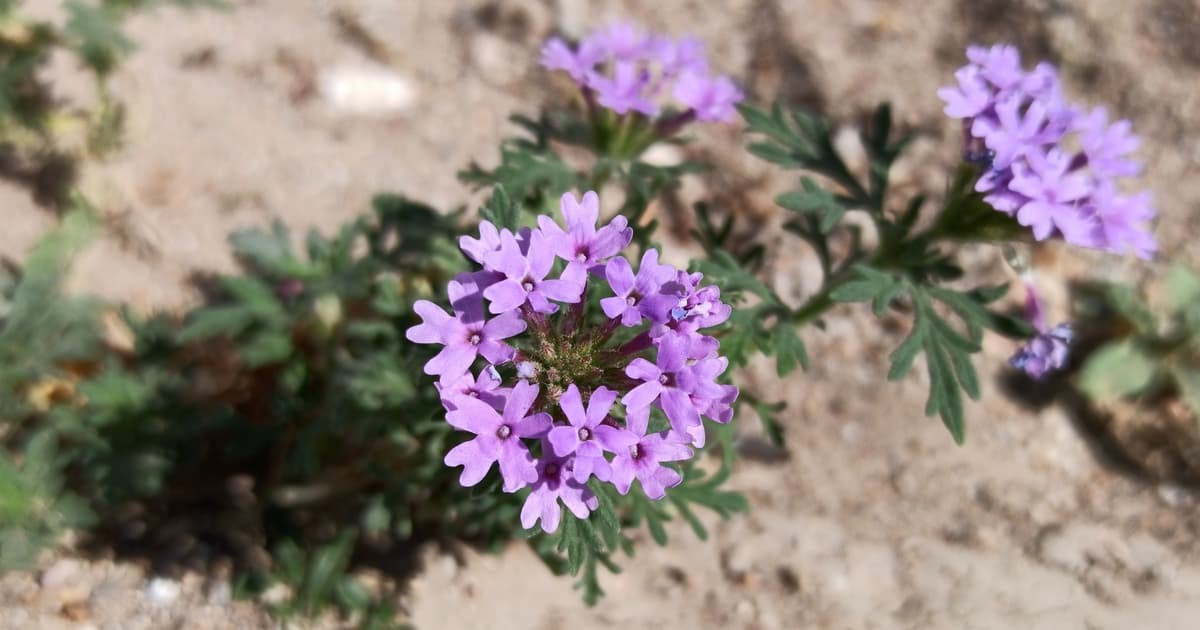
Prairie Verbena (Glandularia bipinnatifida) blooms from March into October, one of the longest runs of any plant in this guide. It’s a steady supplemental nectar source, not a flow you’d split around. It keeps something trickling in from the spring buildup through the summer dearth and into the fall. It grows on disturbed sites and roadsides with nobody’s help, and it holds up in a dry spring when the bigger plants gap out. Real forage, modest yield.
The top of the central Texas forage calendar comes in April and May, and one plant runs it.
Mesquite (Prosopis glandulosa) is the spring flow most central Texas beekeepers split around. A strong bloom in April and May fills supers inside a few weeks. It puts up nectar and pollen in real volume. We pull a light, mild honey off it. Go into the flow strong, and come out making aggressive splits off the population it built. Mesquite is rain-driven, though. A wet spring brings a heavy bloom. It can throw a second, lighter bloom in the middle of summer, once the spring bloom has set its beans. A dry late winter and early spring can leave you almost no bloom at all. The flow you count on one year can come up short the next. Mesquite grows thick from the Hill Country across the Edwards Plateau and down through Seguin and the brush country. Where it does, it’s one of the main spring honey plants going.
Right alongside the mesquite, the bees work a handful of native brush and trees. Blackbrush acacia (Vachellia rigidula) ranges from the Rio Grande Plains up to Austin. Its flowers are a source of honey, and the bees pile onto them. The famous one is guajillo (Senegalia berlandieri), down toward Uvalde and the brush country on the southwestern edge. It puts up a heavy, light-colored honey, the huajilla flow, rated by many as the best in the state. Retama (Parkinsonia aculeata) throws a yellow bloom through the warm months, heaviest after rain. Bees make a fragrant honey off it too.
East and southeast of the Hill Country, the ground stays wetter toward the coast. There the big spring producer is Chinese tallow (Triadica sebifera). Privet (Ligustrum spp.) feeds an early buildup ahead of it. Both are aggressive invasives. Bees work them hard where they’ve taken hold. But they thin out as you climb back onto the dry plateau. Neither is anything to plant or count on.
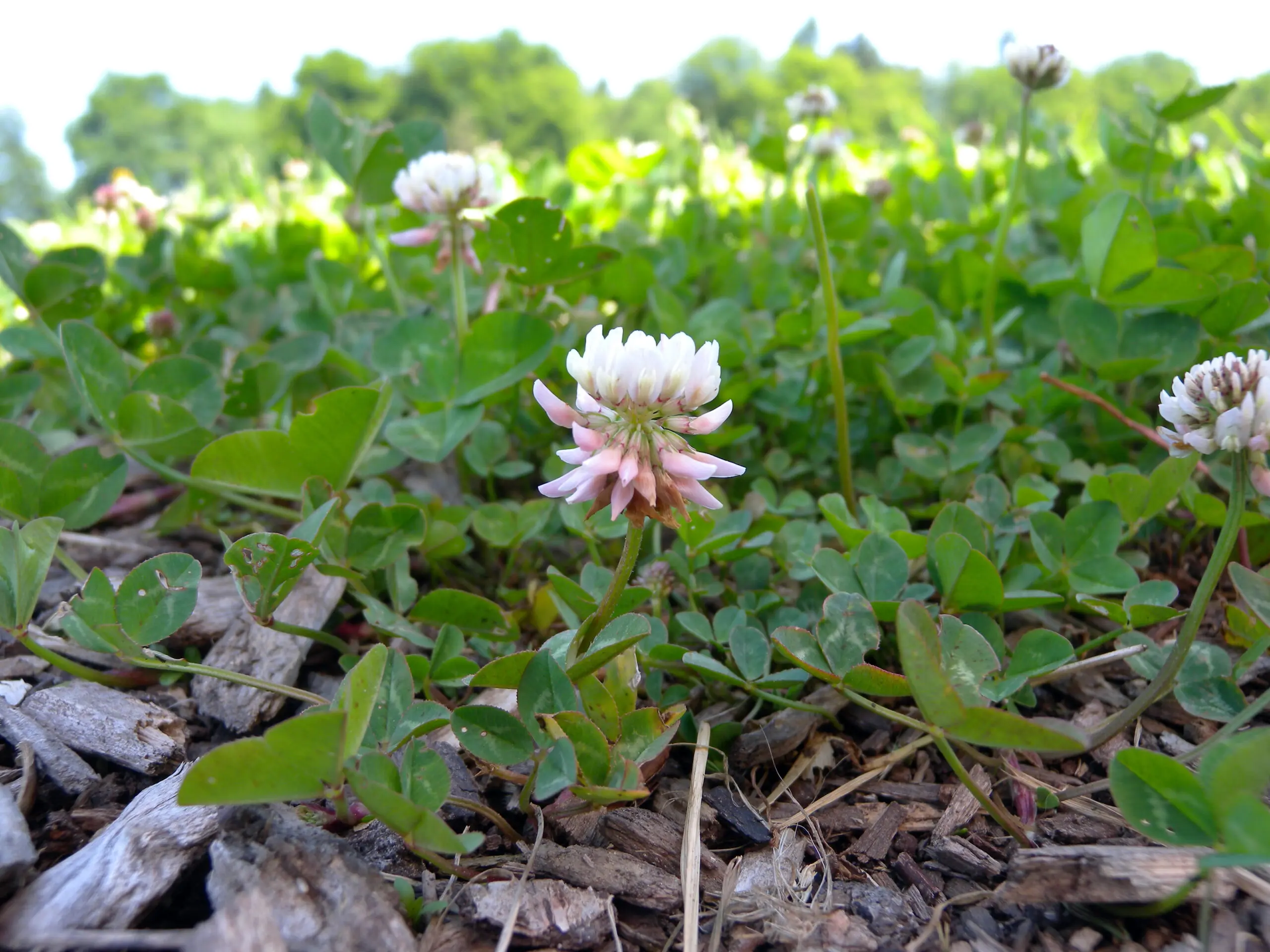
White Clover (Trifolium repens) is one of the most important honey plants in North America. Up in the cooler, wetter clover belt it’s the plant much of the country’s honey comes off, and it’s grown as pasture and cover crop besides. That’s not our climate, though. White clover needs steady moisture, so in central Texas you find it only on irrigated or bottom land and near water, scarce to none on dry upland range. It’s a strong nectar plant where it’s watered, but this far south it’s more an East Texas plant than a Hill Country one, and not one to count on.
July through September is a dearth in central Texas, and there’s no point softening it. The heat sits in, most of the spring plants are spent, and the fall forage hasn’t started. Colonies that built big on the spring flows can burn through stores faster than anything coming in replaces them. The job is to identify the dearth and plan around it, not gloss it over.
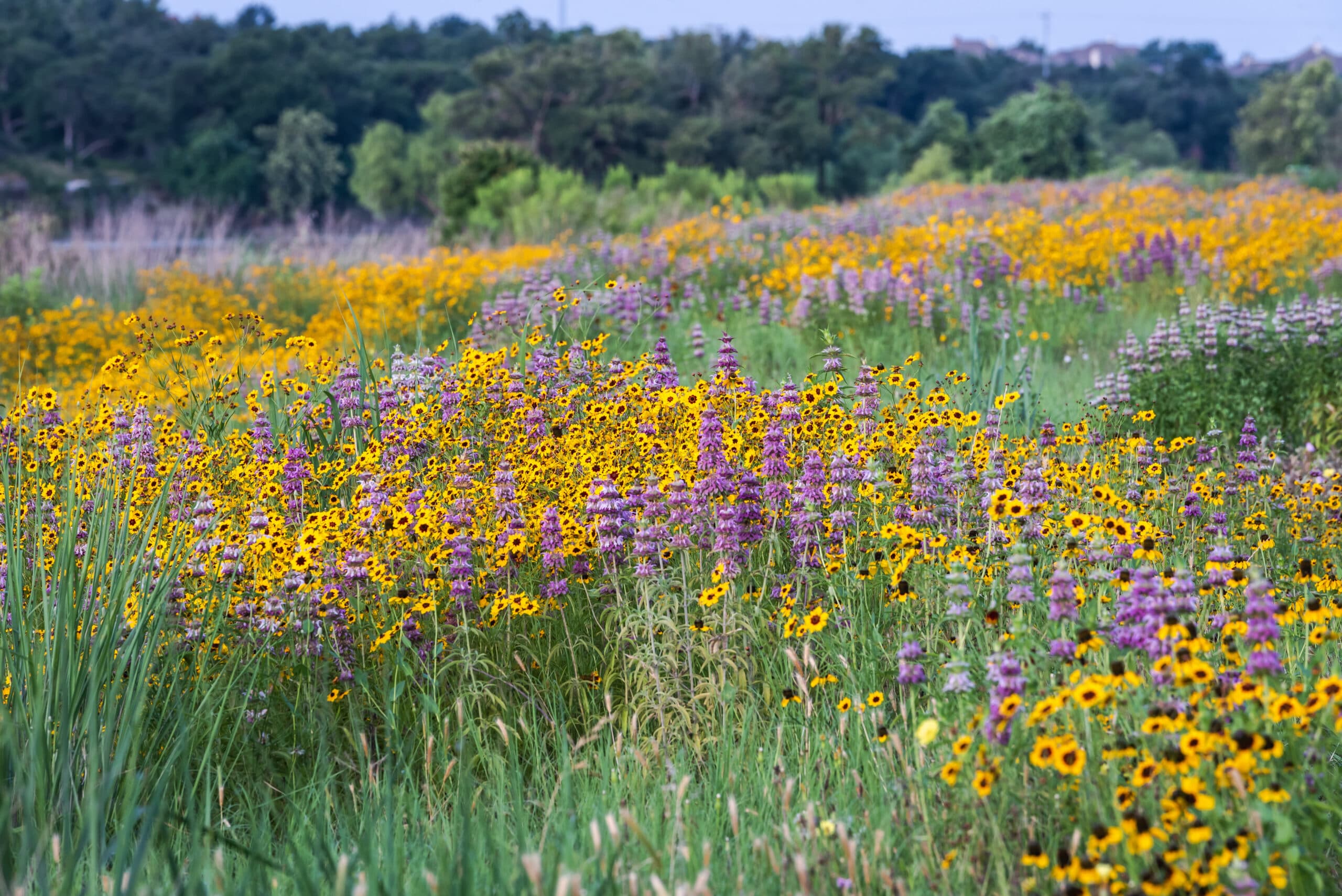
Horsemint / Lemon Beebalm (Monarda citriodora) is the main thing working through the front of the dearth. It blooms May into July with nectar and pollen. The books list it for native bees, and in most years it’s more a bridge than a honey crop. But in a wet spring a strong colony can put up a real surplus off a good stand, and it goes into the summer wildflower honey. What it does is soften the handoff from the spring peak into the hard part of summer. It eases the dearth. It doesn’t end it.
Kidneywood (Eysenhardtia texana) is the other one worth knowing through the heat. It’s native, and it reblooms in flushes after summer rain, white flower spikes from May into October. Bees work it every time it breaks. Like horsemint in a dry year, it’s a bridge, not a surplus. But a property carrying kidneywood has something coming in when most ground’s gone quiet.
A handful of other plants stay in bloom through the dry months and feed the bees a little along the way. Texas lantana (Lantana urticoides) and zexmenia (Wedelia hispida) are both native, both tough, and both keep blooming into fall. Esperanza (Tecoma stans) runs its yellow trumpets spring to fall. None of the three puts up a honey crop. The lantana and esperanza lean more to butterflies and big bees than to a hive on the scale. But they add diversity and keep something open. Texas lilac (Vitex agnus-castus) shows up in yards and along fencelines. It pulls bees in early summer. It’s a non-native ornamental that can escape cultivation, though, so it’s one to know, not one to plant.
None of these carry a colony through a central Texas summer on their own. Watch your stores and your population through July and August. Lift the back of a hive, and feed it when it comes up light. The dearth is also when we watch mites the closest. The colony shrinks through the heat and the mites don’t, so more of them ride every bee that’s left. That’s the heart of how we handle varroa and colony management. Carry enough bees and enough stores through the dearth. Then the colony can get straight to building when the fall flow starts.
Goldenrod is the fall recharge most central Texas beekeepers and landowners overlook. It’s among the most important forage plants in the back half of the year. It shows up right when most people have quit watching.
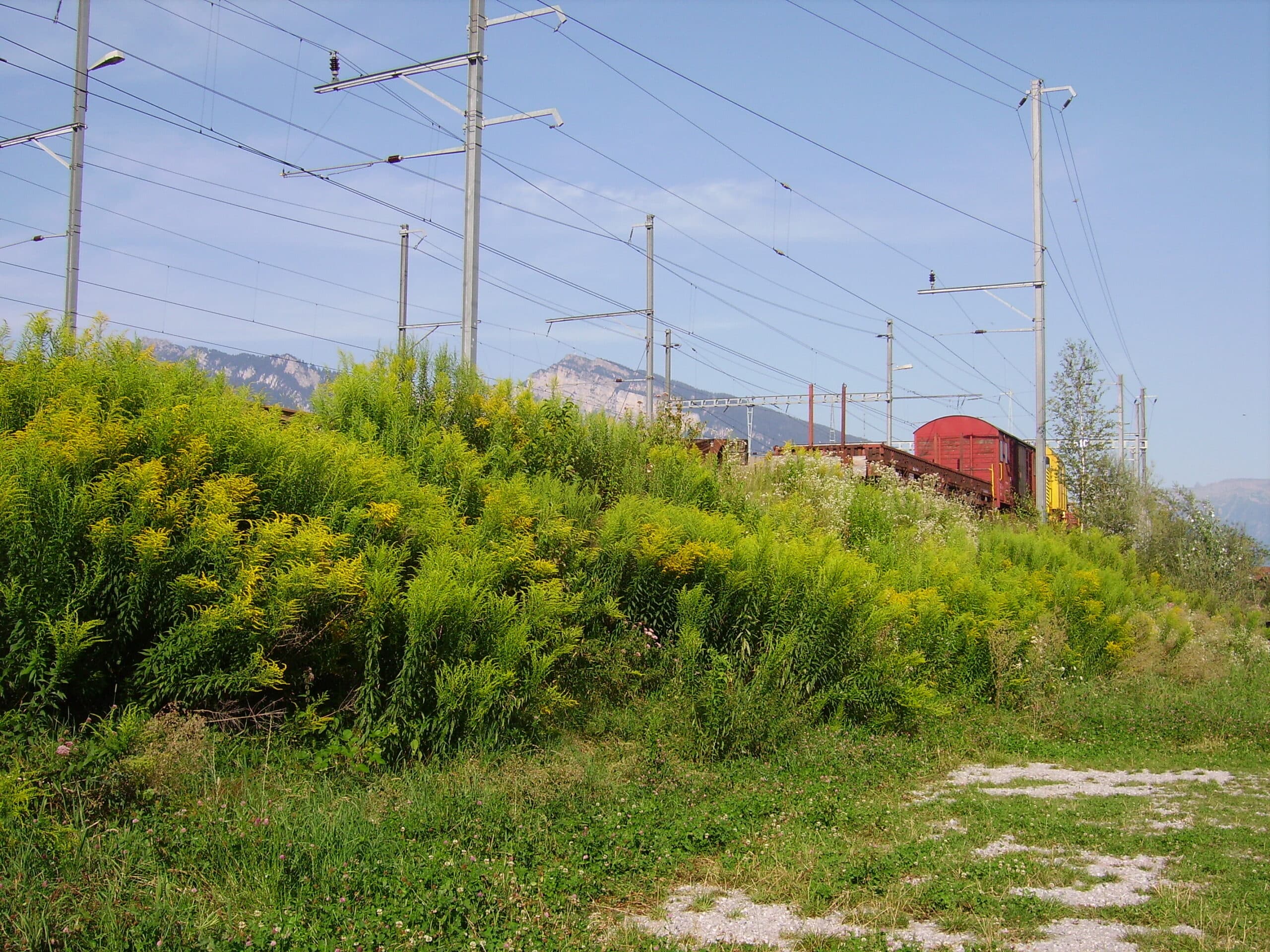
Goldenrod (Solidago spp.) runs its fall flow from September into November, when colonies need to pack in winter stores. An established goldenrod stand gives managed colonies a late recharge. That often cuts the need to feed going into winter, or erases it. The pollen is dense and the nectar comes in volume. Off our hives it runs darker and stronger than the spring honey.
The mistake landowners make with goldenrod is cutting it before it blooms. It grows in pastures, field edges, and roadsides, the same places that get bush-hogged in August and September. If you host bees, leave it standing into November. It pays for itself.
The Lady Bird Johnson Wildflower Center keeps a searchable collection of honey-bee forage plants, filterable to Texas natives. Each entry carries bloom timing and forage notes. Run any name on this list through the USDA PLANTS Database for its scientific name and native status.
For a landowner hosting managed hives, the plants on your ground are feed for the bees, the same as grass is for cattle. They set what the land can carry and how healthy the colonies on it stay. A property with established huisache, mesquite, horsemint, and goldenrod feeds bees close to year-round. It holds bigger, healthier colonies than a place with one bloom and a long gap behind it.
Texas Parks and Wildlife runs a Wildscapes program that walks landowners through putting native habitat back on their ground. The moves that help pollinators broadly help managed hives too. The Xerces Society’s plant lists run well past what’s named here. They’re a good way to put names to what’s already growing on yours.
Forage is one of the first things we read when we look at a site. It tells us what the land can carry before we ever set a box on it. If you’ve got central Texas land and you’re weighing whether to host hives, see how we work with landowners.
Every hive we manage is held to a written standard: hygienic behavior, varroa resistance, queen veracity, and performance in Central Texas conditions. Genetics that don't hold up get replaced — not propped up.
Read Our Standards