Management
How to Read a Brood Frame Like You Mean It
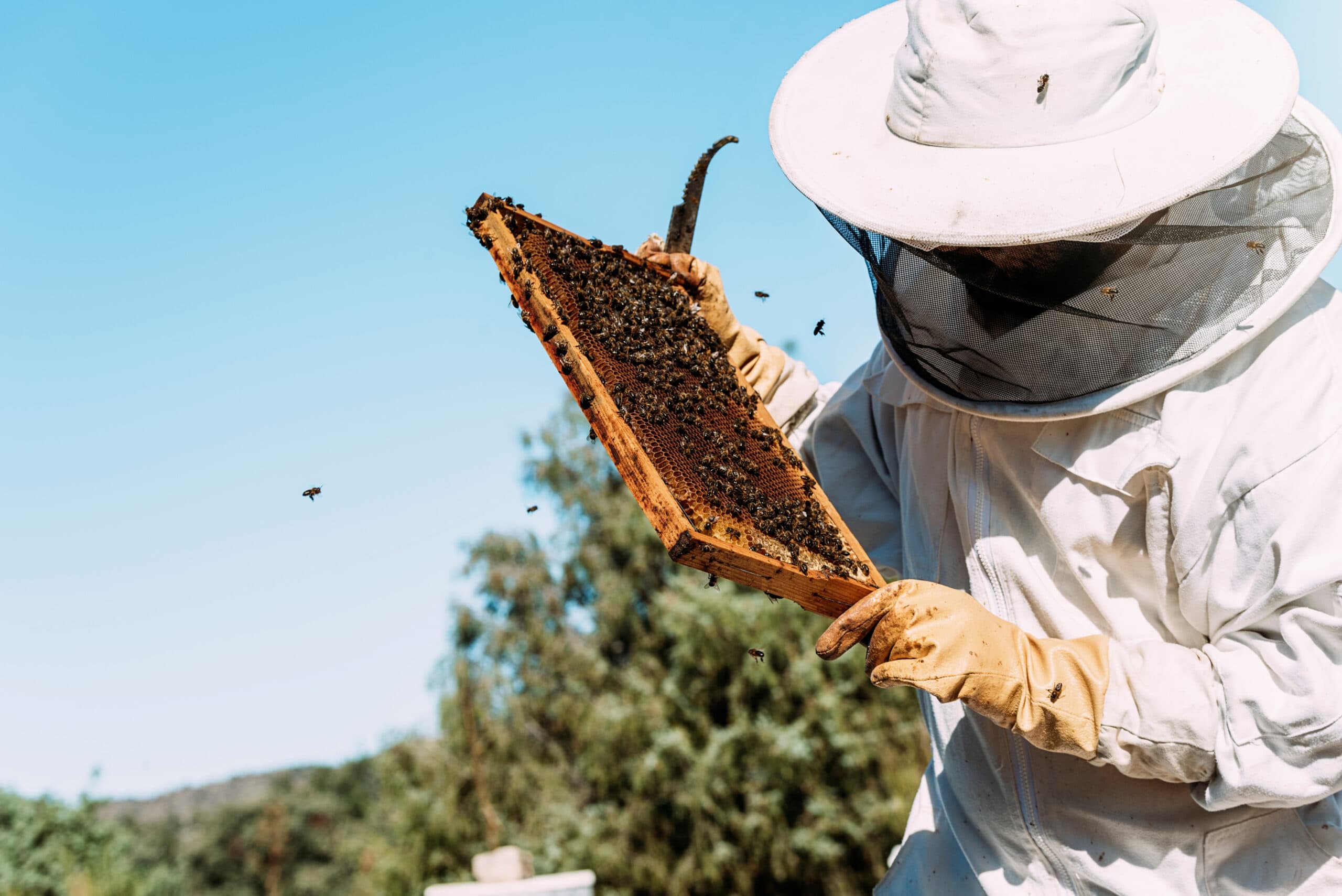
A brood frame is a report card on the queen, the colony’s health, and current disease pressure. Here’s what to look for when you inspect, and what it means when you find it.
Most beekeepers run one varroa treatment and lean on it every season: drop in an Apivar strip and move on. For a lot of folks, the whole list of varroa mite treatment options is that one strip. Run that play season after season and you’re breeding the mites that beat the strip. We do it different. We monitor with an alcohol wash. We treat at 2%. When the count says go, we vaporize, pull the old queen for a brood break, and bring in better genetics.
We treat with oxalic acid, and we breed for bees that can handle mites on their own. The synthetic strips, Apivar, Apistan, CheckMite, we don’t run any of them. The mites already beat all three.
Every synthetic miticide the industry has leaned on has died the same way. Fluvalinate, sold as Apistan, carried beekeepers through the early 1990s, until the mites stopped dying on it. Coumaphos came next and burned out too. Amitraz, the active ingredient in Apivar, is what most folks run now, and it’s next in line. Resistance has already turned up in US operations, documented in Louisiana, New York, and South Dakota. It’s early yet, but it’s the same pattern that finished the other two. You can watch it start in your own yard. Run a wash before you treat and another after. When a full amitraz treatment barely moves the count, that’s resistance showing itself.
Resistance is just selection. Spray a chemical across a few thousand mites and a few live through it. Those few breed the next round. Do it every season on a calendar and you’re raising mites that shrug the chemical off, right in your own hives. It works like a can of Raid. You empty it on the roach, and the one that walks away is the one the poison was never going to kill. Now its offspring are most of the roaches in the house.
That resistance doesn’t stay in one yard. Mites drift on robbing bees and shared equipment, so a neighbor treating on a calendar breeds resistant mites for the whole area. All of it traces back to one thing: what varroa does to a colony once it gets ahead of you.
We treat on a count, not a calendar, and the count comes off an alcohol wash. Two mites per hundred bees, that’s 2%, during the brood season, and we treat. Plenty of beekeepers wait for 3%. That’s the unwritten rule a lot of folks run on. We don’t. We’d rather catch the mite load early than explain a dead colony come March. Below 2%, we leave them be and keep watching.
We use an alcohol wash, not a sugar roll. The sugar roll is the less reliable method, and it leans toward undercounting. A number that reads low is worse than no number, because it tells you you’re fine when you’re not. The Honey Bee Health Coalition’s varroa guide lays out how to pull a wash and read the number. Texas A&M’s bee inspection service says to sample at least four times a year and treat on what the count tells you.
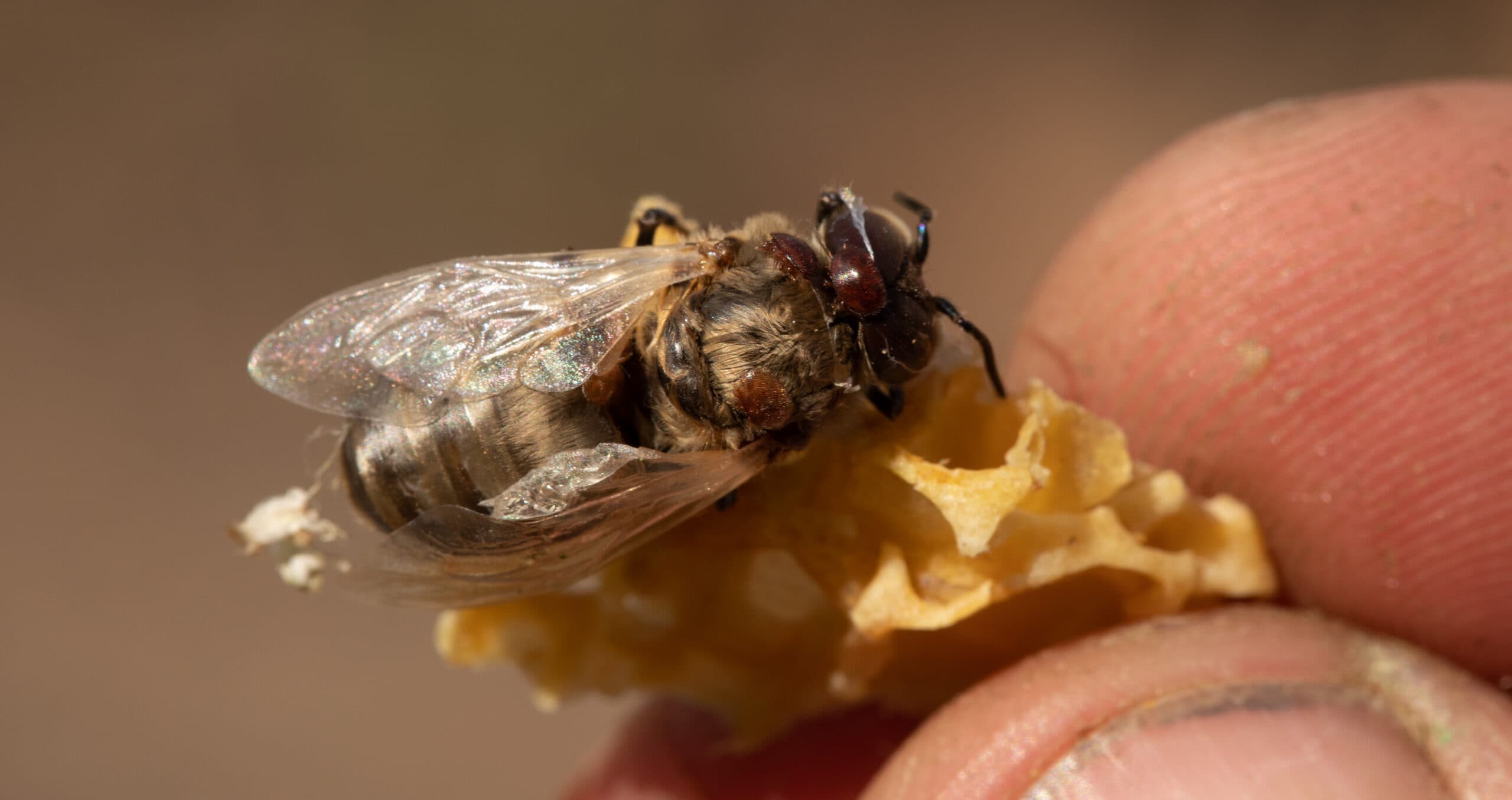
A brood frame won’t hand you the number. By the time you can see mites on the larvae or riding the bees, the load is already high, higher than the morning a wash would have flagged it. Seeing them means pull a wash that day, not skip one. It still pays to know how to read a brood frame before you treat.
When the wash says treat, the vaporizer comes out first. The vapor settles over the bees and kills the mites riding on them. No synthetic residue left in your wax. A mite can evolve its way around a chemical that goes after its nervous system. Oxalic acid works different. It’s a contact acid, it kills the mites it touches and can’t reach the ones it doesn’t, and after decades of use nobody’s documented resistance to it.
Oxalic acid has one hard limit, and you’ve got to respect it. Vapor only reaches the mites out on the bees. The ones sealed under cappings keep breeding until they hatch out. The EPA’s list of registered varroa products covers everything that’s legal to run, oxalic acid included. That blind spot in the capped brood is why we don’t stop at the vaporizer.
“We don’t drop a strip and pray. We pull a count, vaporize, and put in a queen that fights her own mites.”
When a brood-season wash hits 2%, two things happen the same day. We vaporize, and we pull the old queen. There’s no Apivar anywhere in it.
The vapor knocks the phoretic mites off the bees right then. Pulling the queen does the slower work. With nobody laying, the brood runs out, and every capped cell that hatches is one less place a mite can breed. We hold the colony queenless three to five days, then set in a caged queen and trim back any queen cells the bees started while she was gone.
When the new queen goes in, a VarroxSan strip goes in with her. It’s an EPA-registered oxalic acid strip, and it works the whole brood break. It stays in six weeks, the shortest the label allows, long enough to carry past the point where her first brood hatches and the last of the old mites come off the cappings looking for a bee to ride. They come off into a colony that’s still dosed. Then the strip comes out and we go back to monitoring.
After the new queen settles in and starts laying, we don’t pull another count for two full brood cycles, call it two months. A count taken through a brood break is reading a colony that isn’t there yet.
This matters more in Central Texas than just about anywhere. Up north, winter shuts the brood down on its own and hands a beekeeper a broodless stretch. Cold is no free pass, the treatments you’d reach for still carry their own temperature limits, but the break comes with the season. Our bees brood close to year round down here. Nobody hands us that window, so we make it ourselves when the count says to.
The strip isn’t a fallback. It’s how we keep killing mites through the weeks the brood break runs.
It works on contact. Bees walk across the strip and rub against it, and the oxalic acid spreads bee to bee through the cluster. It kills the mites riding those bees the same way the vapor does, only it keeps doing it for weeks instead of in one shot. It doesn’t reach into capped brood. Nothing oxalic does. What it does is wait. As the last of the old brood hatches and those mites come off onto the bees, the strip is still there to kill them.
That’s the plan: vapor to knock the load down now, the strip and the brood break to hold it down, and genetics to make the whole thing easier next year. An Apivar strip might get you through this season, but it costs you the next one, and it buries the genetics problem the colony’s been trying to show you.
Every chemical treatment is a rental. The bill comes back every season. Genetics is the one thing you buy once and keep.
The trait that earns its keep is varroa-sensitive hygiene. VSH bees smell the mites reproducing under the cappings and tear those pupae out before the mites finish breeding. The USDA bee lab in Baton Rouge put the trait on the map, and mite-resistance breeders have carried it since, Texas’s own Weaver line among them. Set infested comb into one of the lab’s VSH colonies and the bees clear out the cells where mites are breeding, so far fewer mites finish a cycle than in ordinary stock. That’s varroa reproduction cut at the colony level, generation after generation, in a way no chemical can match.
Say a colony keeps needing treatment while the hives next to it ride out the same mite pressure fine. That’s not a colony to prop up with chemistry. That’s a queen to replace, which is when to requeen instead of treat. It’s the slow fix, and the only one that sticks.
We treat, and we treat hard, the day a wash reads 2%. Anybody selling treatment-free as a varroa plan is selling you dead colonies. The difference is where we point it: on the count instead of the calendar, oxalic acid instead of a synthetic, and a little more of the mite load handed to genetics every season. That’s how we handle varroa, start to finish. Watch the count. Treat when it says so. Breed the bees that need it least.
Every hive we manage is held to a written standard: hygienic behavior, varroa resistance, queen veracity, and performance in Central Texas conditions. Genetics that don't hold up get replaced — not propped up.
Read Our Standards