Threats
European Foulbrood in Honey Bees: What EFB Is Telling You
European foulbrood in honey bees kills larvae before cells are capped. Here’s how to identify EFB, distinguish it from AFB, and manage colonies without reaching for antibiotics first.
Varroa is the most consequential pest honey bees face. Let the mites get ahead of you and every other threat in the Honey Outlaws pest encyclopedia hits harder for it. The Bee Informed Partnership has tracked U.S. colony losses since 2010, and varroa lands among the leading drivers of the dead-outs year after year. Texas apiaries are no exception.
Varroa destructor is a parasitic mite out of Asia, where it spent a long time on the Asian honey bee (Apis cerana) without doing much harm. That bee grooms the mites off itself and seals up infested drone brood to break their breeding, so the two reached a truce over the long history they shared. The European honey bee (Apis mellifera) we keep had no such history with it. When A. mellifera was brought into eastern Asia and kept alongside Apis cerana, varroa crossed onto a host with none of those defenses, and from there it traveled the world on shipped bees and equipment. It reached the United States in 1987. There’s no varroa-free population of Apis mellifera left anywhere in North America.
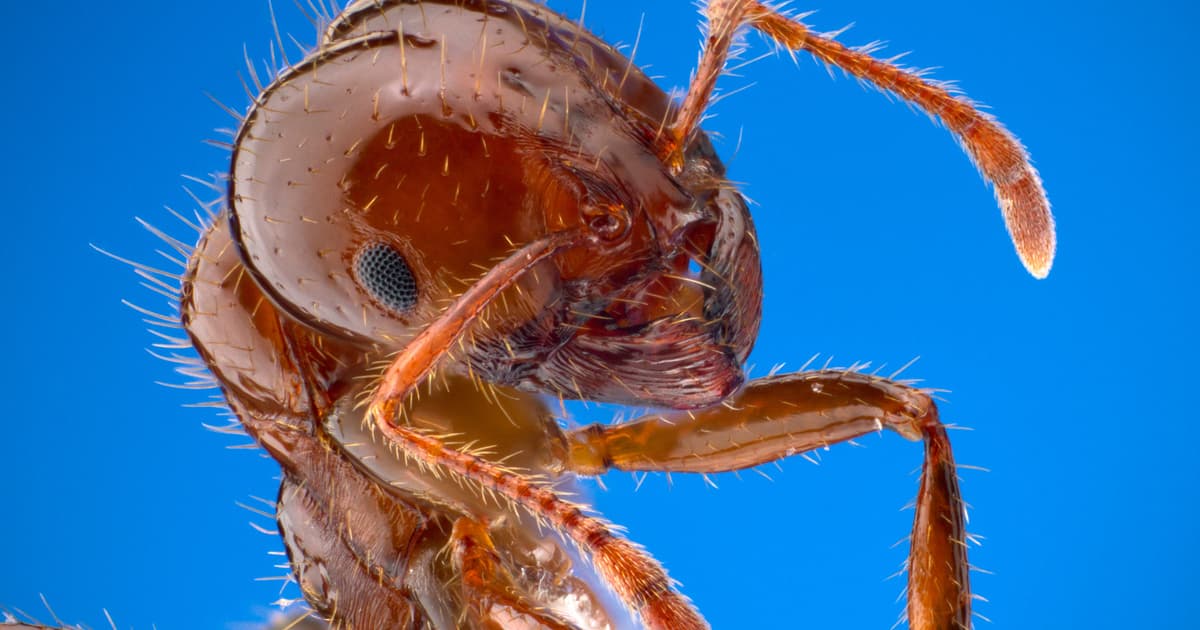
You can spot one with the naked eye, a flat reddish-brown button about the size of a pinhead. The easiest place to catch sight of one is right on a bee’s back, on the thorax or the top of the abdomen, and on drone pupae when you uncap a patch of drone brood. Where the mite actually feeds is tucked down between the abdominal plates underneath, which is harder to see. The adult female runs about 1.1 mm long and 1.5 mm wide, wider than she is long. Seeing one, or even a handful, doesn’t tell you what the colony is carrying. That number only comes off a sample.
Varroa lives in two phases, one riding adult bees and one breeding in capped brood, and the breeding phase is where a mite problem compounds.
A mated female mite, called the foundress, slips into a worker or drone cell in the hours before the bees cap it and settles into the brood food at the bottom, under the larva, to wait out the sealing. Once the larva pupates, she feeds and begins to lay. Her first egg is a son, the ones after daughters. The son matures ahead of his sisters and mates them right there in the sealed cell, so a daughter that climbs out with the new bee is already mated and ready to start her own line. A worker cell stays capped just long enough for one or two of those daughters to finish developing and mating before the bee emerges. Drone cells stay sealed a few days longer, so two or three daughters make it out mated. The rest of what she lays runs out of time under the cappings, which is the whole reason varroa exploits drone brood first.
Once the bees chew out of the cell, the mites ride out with them into what beekeepers call the phoretic phase. They travel on the adult bees, feeding on the fat body the same as they did in the cell, and wait for the next brood to cap over. They aren’t breeding out here, but they’re still draining the bees they ride. A colony that washes clean in March can be in real trouble by August, because the mite population climbs fast over a season of brood, and Texas bees brood close to year round with no winter shutdown to break the run.
Varroa hits a colony two ways at once, through the feeding itself and through the viruses it carries in.
For years the books had varroa feeding on bee blood, the hemolymph. Research published in 2019 by Samuel Ramsey and colleagues at USDA ARS put that to rest. The mite feeds mostly on the fat body, the organ a bee runs its metabolism through, the one that handles immune response, detoxification, lipid storage, and the vitellogenin a bee needs to raise brood and live out a normal span. Damage that, and the bee has a harder time recovering from everything else that comes at it. Parasitized bees come up short-lived, weak on immunity, and poor at foraging even when they look normal and healthy.
The viruses are the second hit, and for the colony as a whole they’re the knockout blow. While it feeds on the brood, the mite carries deformed wing virus (DWV) into the pupae, and the virus multiplies in the developing bee. Bees that emerge from those cells have crumpled wings and short abdomens. They can’t fly, can’t work the hive, and don’t live long enough to pull their weight. The more mites in the colony, the more virus moving with them, and a bee already gutted by fat-body damage puts up a weaker fight against it. By late summer in a colony nobody is watching, the bees die off faster than the queen can lay their replacements. In most varroa collapses, it’s the virus that does the actual killing.
A few mites in plain sight is the easy part. What a walk through the boxes won’t give you is the load, the share of the colony’s bees that are actually carrying mites, and the load is the number that decides everything. To get that actual load, you pull a sample.
Our go-to for that is the alcohol wash. Scoop about 300 bees, roughly half a cup, off a brood frame near the capped cells, cover them in 70% isopropyl, shake for a minute, strain, and count the mites that drop. On a 300-bee sample, six mites is 2%, and 2% during the brood-rearing season is the line where we treat.
We run an alcohol wash, not the powdered-sugar roll. Both are ways to shake mites off a sample of bees and turn it into a number. The sugar roll goes easier on the bees, but it’s the less reliable read and it leans toward undercounting. The alcohol kills the sample, which nobody loves, but it shakes the mites loose far better. A bad count is worse than no count, because it tells you you’re fine when you’re not.
That 2% line is the aggressive end of the range. The Honey Bee Health Coalition’s varroa guide puts the treatment threshold somewhere between 2 and 3% across the active season, and plenty of beekeepers wait for the 3% before they move. We don’t. We’d rather act early than explain a dead colony come March. Past about 3% the mites tend to climb faster than the colony can replace its bees, and from there you’re chasing the count instead of setting it.
Texas’s own bee inspection service says to sample at least four times across the active season. With colonies rearing brood most of the year and no dependable broodless window, that steady sampling is the only early warning that holds up. Pulling a wash puts you on the brood frames anyway, and it pays to know how to read a brood frame while you’re in there, because the comb tells you more than the mite count does.
The mites don’t hold below threshold on their own, so we wash every four to six weeks from early spring through fall. Under 2%, we keep watching. At 2% or over, we go to work.
Oxalic acid is our treatment, and the vaporizer comes out first. The vapor settles over the bees and kills the mites riding them. It leaves nothing behind in the wax. A mite can breed its way around a synthetic that targets its nervous system, but oxalic acid gives it nothing like that to adapt to, which is why nobody has documented resistance to it after decades of use. Its one hard limit is the cappings. Vapor reaches the mites out on the bees, never the ones sealed in with the brood.
A single round of vapor won’t finish a heavy load, because most of those mites are sealed under cappings where it can’t reach. So we make the broodless window ourselves. We cull the old queen and vaporize the same day. With no queen laying, the brood runs out cell by cell, and every capped cell that hatches is one less place a mite can breed.
A few days into the break, we set a caged queen back in and hang VarroxSan strips with her, a strip for every two or three frames of bees, the way the label calls for. They’re EPA-registered oxalic acid strips that kill on contact, and they stay in six weeks, the shortest run the label allows. As the last of the old brood hatches and those mites come off onto the bees, the strips are right there to catch them, all while the new queen is being let out of her cage and getting to work. Then we leave it alone. We don’t pull another count for about two months, long enough for her own brood to come on and show whether her bees are holding the line. We lay the whole sequence out, wash by wash, in varroa mite treatment options. There’s no Apivar in any of it. The mites beat amitraz the same way they beat fluvalinate and coumaphos before it, and we’re not going to breed the resistant ones in our own yard.
Underneath the whole program, we’re breeding our way clear of it. We select for bees that keep their own mite loads down, so the counts climb slower and the years we have to force that window ourselves grow fewer.
“Varroa beats the beekeepers who keep betting the yard on a chemical the mites already beat. We treat on the count and breed the bees that handle their own mites.”
The trait that does the heavy lifting is varroa-sensitive hygiene, VSH for short. VSH bees smell the mites reproducing under the cappings and pull those pupae out before the mites can finish, so far fewer mites complete a breeding cycle in a VSH colony than in ordinary stock. The trait came out of work at the USDA bee lab in Baton Rouge, and the job of breeding bees that handle their own mites has carried well past that one lab, Texas’s own Weaver line among them. That’s varroa reproduction cut at the colony level, season after season, in a way no chemical keeps up with.
We started with seeder stock from VSH breeders and have built our own lineage off those genetics ever since, bringing in fresh material now and then from known VSH queen producers. To see which of our breeder queens actually throw the trait, we run a Harbo assay, since the test reads a laying colony’s response to mite-infested brood, not a queen on her own. Once genotyping for VSH comes available at scale, we’ll move to that.
We treat hard the day a wash reads 2%. Anybody selling treatment-free as a varroa plan is selling dead colonies. The difference comes down to a few choices, the count over the calendar, oxalic acid over a synthetic, and a little more of the job handed to the bees’ own genetics every year. That’s how we run our bees, start to finish. Watch the count, and treat the day it tells you to.
Every hive we manage is held to a written standard: hygienic behavior, varroa resistance, queen veracity, and performance in Central Texas conditions. Genetics that don't hold up get replaced — not propped up.
Read Our Standards