Threats
European Foulbrood in Honey Bees: What EFB Is Telling You
European foulbrood in honey bees kills larvae before cells are capped. Here’s how to identify EFB, distinguish it from AFB, and manage colonies without reaching for antibiotics first.
Nine honey bee pests and diseases can end your season in Texas. Most of them give you a threshold, a number or a sign that tells you when to move. A few your bees handle on their own if the genetics are right. One of them gives you no threshold and no treatment at all.
This is what each of these threats costs a colony, and what we do about it at Honey Outlaws. Each gets the short version here, and its own entry if you want the rest.
The eight below reproduce or spread inside the hive. They’re the ones that demand the most active management, and the ones where your genetics do the most to change the odds.
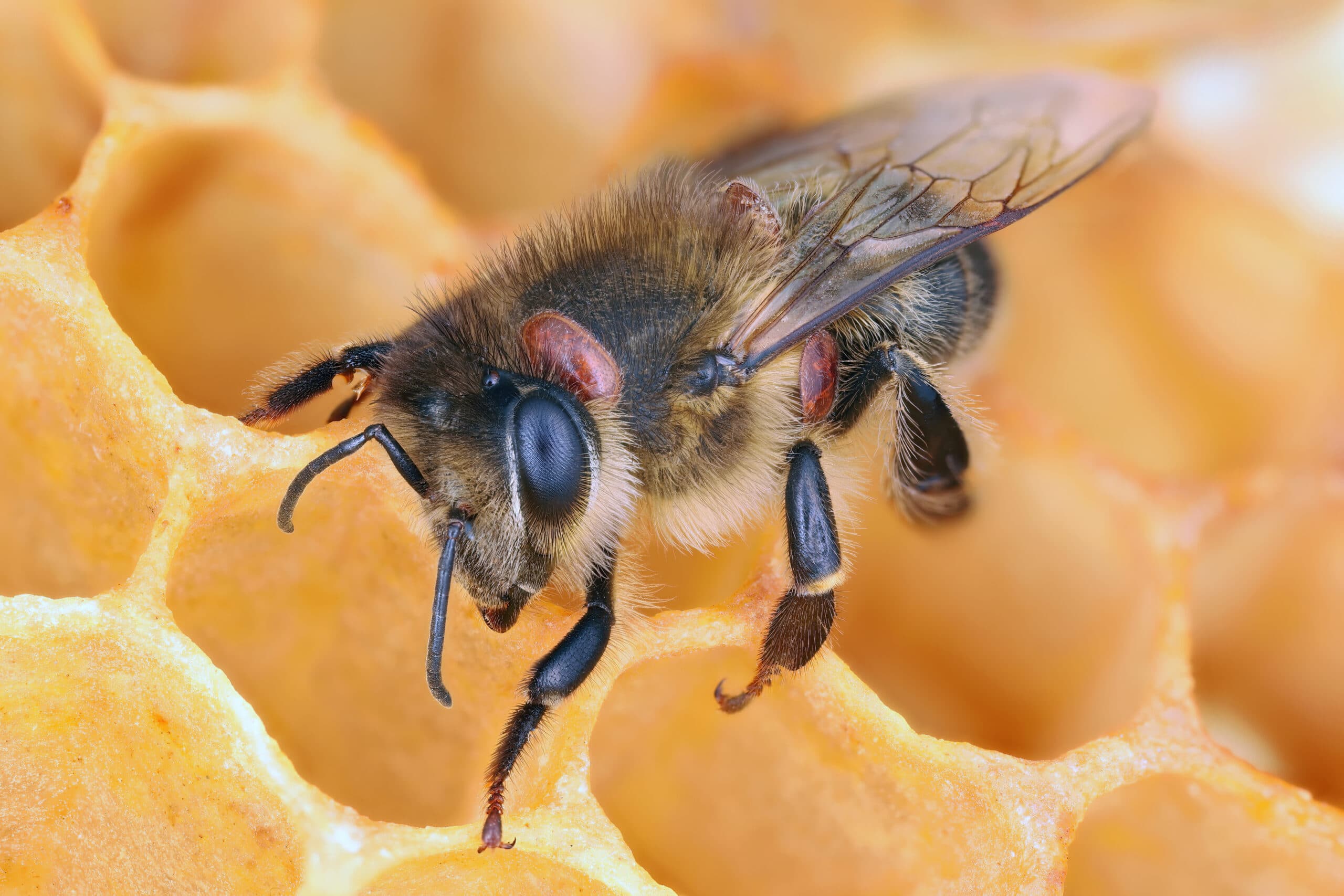
Varroa is the worst thing on this list, and it makes most of the others worse. It reproduces under the cappings, feeds on the fat bodies of developing bees, and infects them with deformed wing virus as they grow. The mite does damage on its own, but the virus it carries does most of the killing.
We monitor with an alcohol wash, not a sugar roll. The sugar roll undercounts, and a count that reads low is worse than no count, because it tells you you’re fine when you aren’t. Our threshold is 2%, not the 3% a lot of folks wait for. We’d rather catch it early than explain a dead colony in March.
When a brood-season wash hits 2%, we vaporize and pull the queen the same day. We hold the colony queenless a few days for a brood break. Then a caged queen goes in behind a VarroxSan oxalic-acid strip. It keeps killing mites through the whole break. After she’s laying again, we leave the counts alone until she’s two full brood cycles in. With the queenless break ahead of that, it runs about two months from the day we pulled the old queen. The Honey Bee Health Coalition’s varroa guide is the one we point people to for monitoring. Our full varroa writeup gets into the rotation and what tips us into escalating.
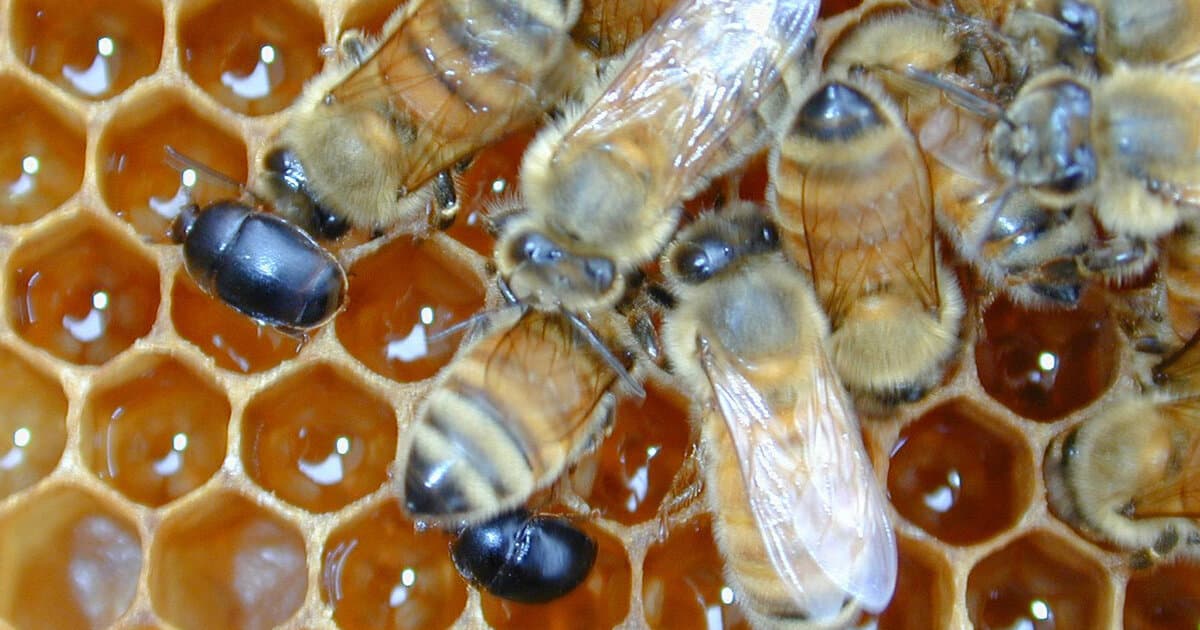
Small hive beetle is well established in Texas, and the pressure runs year-round. Larvae hatch in the comb, tunnel through pollen and honey, and foul everything as they go. The fermentation they set off turns frames to slime and can push a heavily infested colony to abscond. Mature larvae leave the hive, drop to the ground, and burrow into the soil to pupate. They come back as flying adults looking for the next colony. That’s the catch with beetle control: you can’t break the cycle at one hive. A sticky barrier on the stand legs won’t do it. Neither will a mat under the hive to stop larvae reaching the soil. The beetles that reinfest you fly in from anywhere.
We don’t fight beetles at the stand, we set the colony up to fight them itself. A populous hive corrals beetles into propolis prisons and patrols the comb they want to lay in. A thin one can’t, and that’s when beetles take the box. Hives go in full sun wherever the yard allows, since beetles like shade and damp ground and a colony in the open sits under less pressure. When beetles overrun one hive while the boxes beside it stay clean, the beetles aren’t the problem to solve. Check the population, the queen, and whether a recent split left the colony too thin to defend itself.
AFB is the one disease here you can’t manage your way out of. The bacterium throws spores that survive in wooden hive bodies for decades, and contaminated woodenware can’t be reliably sterilized. Any colony you put back on that equipment picks the infection right up. In Texas, a confirmed case means the infected colony is destroyed. Burning the colony and its woodenware is the method TAIS recommends as the most effective. You can scrape and scorch woodenware instead, but nothing guarantees that kills every spore. We’ve never had AFB in our yards. If we ever do, we’ll follow TAIS to the letter, and we’d tell anyone facing it to do the same.
Field diagnosis starts with what you can see and smell. Sunken, greasy, perforated cappings over dead pupae. A sharp, rotten odor that doesn’t read like ordinary decay. Confirm it with the ropiness test: slide a toothpick into a suspect cell and draw it out slow. A healthy cell pulls clean. AFB pulls a brown thread that strings out an inch or more before it breaks. If you see that, or if you only suspect it, stop the inspection, wash your hands and gloves, and call the Texas Apiary Inspection Service. Don’t wait for certainty, don’t move frames, and don’t sell or hand off equipment. AFB is reportable in Texas, and that’s the law, not a courtesy. Under the Texas Agriculture Code, failing to report a confirmed case is a Class C misdemeanor.
A healthy, populous colony keeps wax moth out without help. Workers patrol the comb, find the larvae, and throw them out before they establish. Wax moth only wins inside a live hive when something else has already weakened it: low population, a failing queen, disease pulling workers off patrol. When it does win, it’s thorough, tunneling through drawn comb and packing the frames with webbing and frass.
In an active colony, wax moth is a symptom to chase, not a pest to treat. Find what weakened the hive first. Stored equipment is where you actually treat for wax moth, and for us it splits by frame type. Brood comb gets CERTAN, a Bacillus thuringiensis biological, when it goes into storage. Drawn honey supers get Para-Moth, the para-dichlorobenzene control, in a stack you’ve strapped and sealed so the vapor stays where you put it.
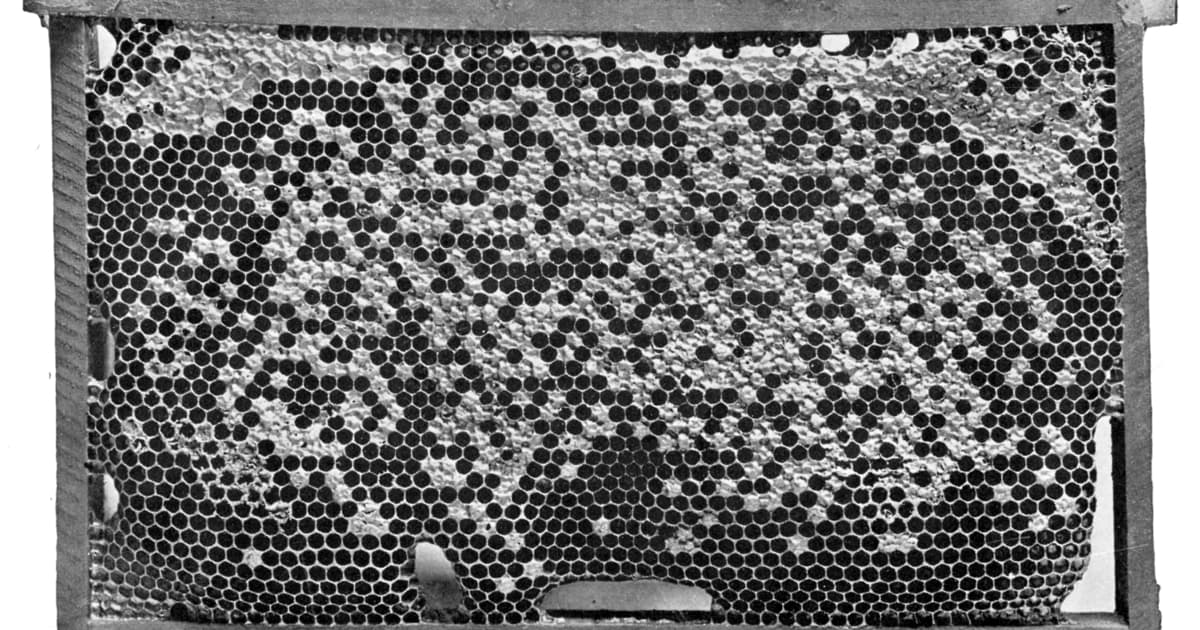
EFB gets mistaken for AFB in the field, and the response to each is nothing alike. EFB hits unsealed larvae under nutritional stress: they go yellow-brown, twist in the cell, and die before capping. Unlike AFB, it can clear on its own. A strong colony moving into a real nectar flow will sometimes shake a mild case without help, and it carries no burn mandate.
We haven’t dealt with EFB in our own yards. If we did, the first job would be getting the call right. EFB larvae are yellow-brown and twisted, but they skip the ropy pull and the sharp decay smell that mark AFB. When you can’t tell the two apart, contact TAIS and send a sample before you act on either one. Guess wrong toward AFB and you burn equipment you didn’t have to. Guess wrong the other way and you leave foulbrood standing in your yard.
Nosema ceranae is the one on this list that hides. It’s a gut parasite, and most of the time it shows nothing on the outside of the hive at all. The harm it does is quiet: it shortens foragers’ lives and flattens the build-up you’re counting on, so the colony just underperforms with no obvious reason behind it. By the time you’d think to look for it, you’ve usually ruled out everything louder.
The sign people used to watch for was dysentery, brown streaking down the front boards and across the frames. That sign is real, but it tracks Nosema apis better than N. ceranae, and ceranae has displaced apis in most US apiaries. A ceranae colony can fade with clean boards. So once varroa and queen status are ruled out, we treat unexplained underperformance as reason enough to consider Nosema even with nothing streaked in sight.
When dysentery is visible, our response starts outside the box. We wipe the hive down with isopropyl alcohol, and on a bad case, scorch the inside of the woodenware to knock the spore load down. To bring the colony back we feed 1:1 syrup cut with Honey-B-Healthy and Amino-B Booster, the protein and electrolyte support helping rebuild bees whose guts and foraging took the hit. N. ceranae is the harder case. We haven’t had a confirmed case of it ourselves. There’s no dysentery to catch it by and nothing on the market that reliably fixes it once it’s there, so colony strength and ruling out varroa first are what we actually lean on.
In Texas, chalkbrood is mostly a cold-weather problem. You see it when there’s frost on the ground and the colony’s too thin to hold brood-nest temperature. The fungus needs cool, damp conditions to take, and a populous hive in warm weather rarely gives it a foothold. It’s a strength signal more than an emergency.
We diagnose before we respond. If the population’s too thin to cover the brood, we combine it onto a stronger colony with a double-screen board. That lifts the internal temperature without a full merge and buys the weak side time to build. If it’s damp rather than thin, a screened top board helps air it out. The timing matters, though. Vent it while it’s still cold out and you’ll chill the brood and make things worse. Wait until temperatures settle. Chalkbrood that hangs on in a strong, well-kept colony is a requeening signal. The bees aren’t clearing infected larvae fast enough, and that’s genetics, not weather.
Deformed wing virus is what’s actually killing the colony in most of the losses people pin on varroa. Varroa is just how it gets around. Bees crawl out of the cell with crumpled, useless wings and stunted abdomens. They can’t fly or work, and they die young. A hive shedding enough of them stops being able to replace its own losses.
There’s no antiviral for it. By the time you’re seeing it at the entrance, OAV and a VarroxSan strip won’t pull you back in time. The mite load behind it is already past what oxalic acid can clear in the window you’ve got. What’s left then is an emergency requeen and a hard, fast knockdown on the count. Even then, the colony may not have the young bees left to climb back. That’s the whole reason we hold at 2% long before it gets here. Let varroa run, and DWV is the wall at the end of it.
“Most of what threatens a hive can be managed if you catch it early and your genetics hold. One exception: American foulbrood. You burn.”
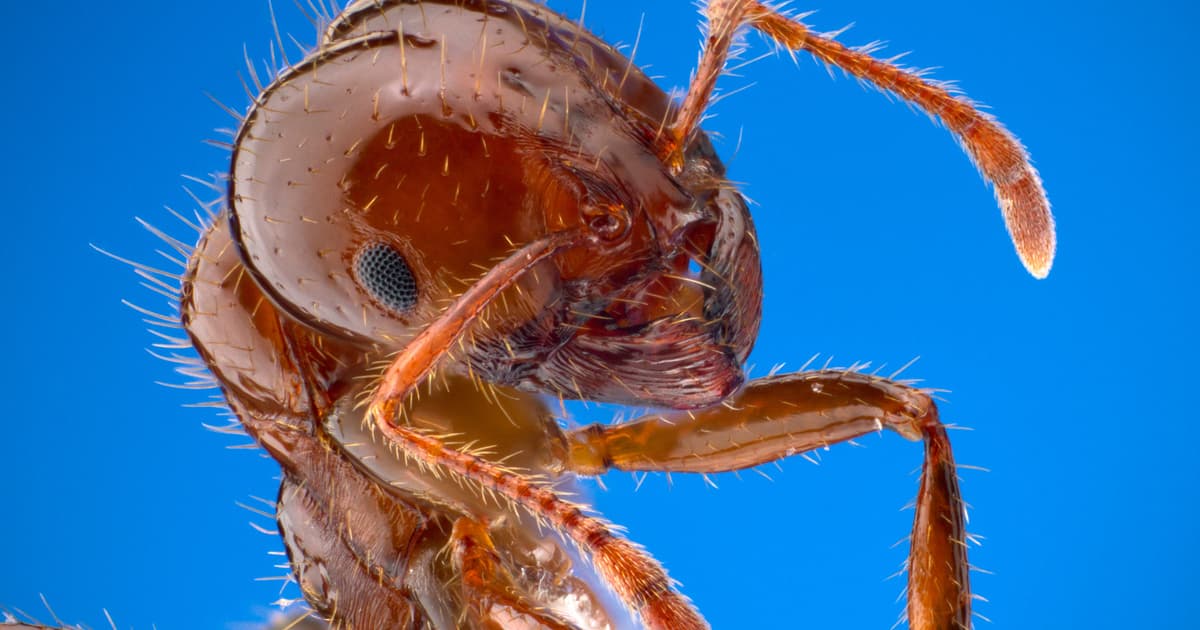
Fire ants are the only threat here that works from outside the colony, and that flips the approach.
Fire ants don’t infest a hive the way varroa does. They raid it. Scouts find a way in, recruit, and go after brood and honey stores. A strong colony turns them back at the entrance. A nuc or a weak hive can’t, and an established raid on a nuc is usually the end of it.
Fire ants climb, which is exactly why a leg barrier works against them. Our stand legs get CatchMaster Insect Barrier Adhesive, and the adhesive stops them on the way up. For the yard itself, we bait now and then with Crisco and boric acid in an enclosed station. The station keeps the mix out of the rain and off non-target insects. Foragers carry it back and share it through the nest before it kills. The whole colony goes down, not just the scout. None of it matters as much as a colony strong enough to defend its own door.
The honey bee pests and diseases on this list don’t hit every colony the same. The hives that struggle most with varroa tend to be the same ones the beetles overrun, the same ones carrying chalkbrood, the same ones that won’t build through a Texas dearth. Genetics is the thread running through all of it.
VSH queens cut varroa’s reproduction at the colony level. Hygienic bees find and pull diseased and infested brood before an infection sets. Selecting for both won’t make any of this disappear. What it does is move the margin you’re working inside. In Texas heat, with its hard dearths and constant pest pressure, that margin is everything. It’s the difference between managing a problem and losing the colony. Treatments buy time, genetics changes the math.
All of it shows up first in the brood frame. Reading what’s in front of you on a routine inspection is its own skill, and we walk through our approach in how to inspect a brood frame. We reach for oxalic acid first and escalate only when the numbers force it. That’s the heart of our beekeeping philosophy.
Every hive we manage is held to a written standard: hygienic behavior, varroa resistance, queen veracity, and performance in Central Texas conditions. Genetics that don't hold up get replaced — not propped up.
Read Our Standards