Threats
European Foulbrood in Honey Bees: What EFB Is Telling You
European foulbrood in honey bees kills larvae before cells are capped. Here’s how to identify EFB, distinguish it from AFB, and manage colonies without reaching for antibiotics first.
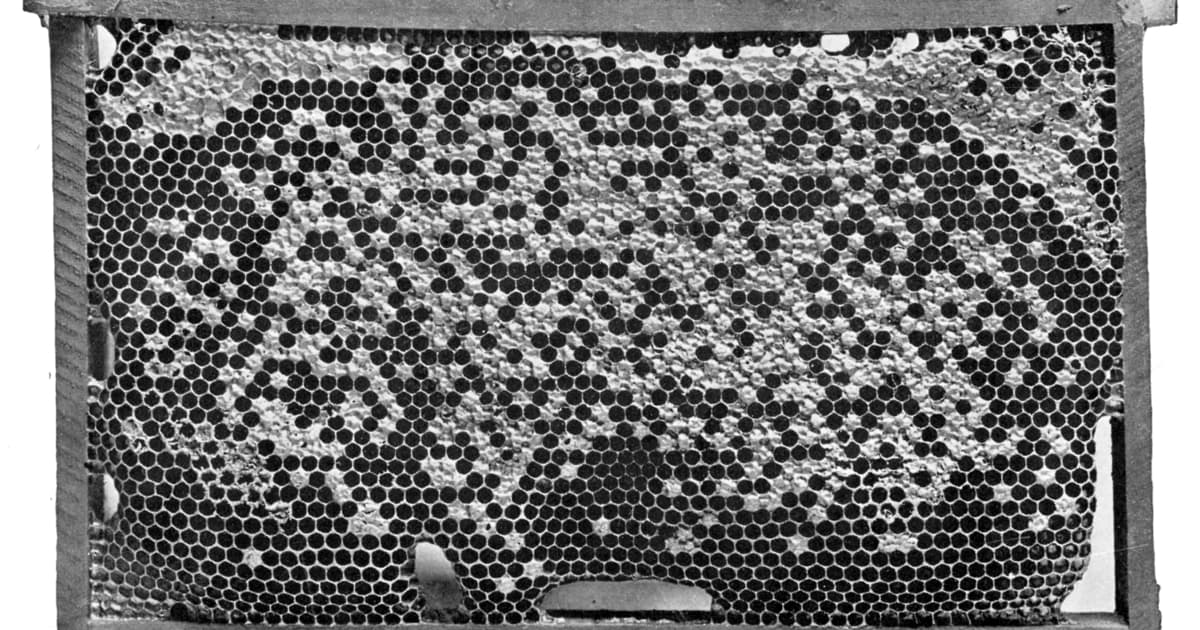
Chalkbrood in honey bees shows up as white, chalky mummies sitting in cells where larvae should have capped over and hatched out. A mild case is a few of them the bees have already pitched onto the landing board. A heavier one rattles when you shake the frame. Either way, the disease leaves a signature you don’t forget once you’ve seen it.
Most chalkbrood clears on its own as a colony builds through spring. The case worth your attention is the one that doesn’t, because a colony that can’t clean itself out has a genetics problem no product will fix. Cool damp weather starts the trouble, but the bees themselves decide whether it ends. This entry is part of the Honey Outlaws pest encyclopedia.
Chalkbrood is caused by Ascosphaera apis, a fungus that only infects brood. A larva picks up the spores by eating them, mixed into the food the nurse bees give it, at about three to four days old. The spores germinate in the gut, and the fungus grows through the larva from the inside, taking its food and then its tissue. It kills the larva around the time the cell is capped, then keeps growing until a fuzzy white mold covers the whole thing. What’s left dries into the hard, chalk-white mummy the disease is named for.
Fresh mummies are white and cottony. As the fungus matures and forms its spore-bearing structures, they darken toward gray and then black, and you’ll often find both stages on the same frame. That range of color is normal within a single infection.
Chalkbrood is easy to tell from the diseases that actually threaten a colony. The mummies are dry, hard, and loose in the cell, roughly the shape of the larva, and a frame full of them rattles when you shake it. That rattle is the quick field check. American foulbrood, the one you’re required to report, leaves a sunken, greasy scale that ropes out when you probe it. If the mummies are dry and hard and the frame rattles, whatever their color, you’re looking at chalkbrood, and chalkbrood on its own rarely ends a colony.
The Texas Apiary Inspection Service ties chalkbrood to spring and to any stretch of cool, damp weather that favors fungal growth. There’s a mechanism behind that timing. The spores a larva eats don’t always take hold. What tips an ordinary gut-load of spores into a lethal infection is chilled brood, larvae that drop below the temperature the colony normally holds them at, and cool, wet spring weather is when that happens.
Spring is also when a colony expands into more comb than its adult bees can cover and keep warm. Brood on the cold margins of the nest runs cooler than brood packed in the center, and cooler brood is the brood that gets hit. A colony coming out of winter short on bees leaves more of that exposed edge than a strong one does.
A strong colony covers and warms brood in spring that a winter-worn, understrength one can’t. As the weather turns warm and the population fills out, the hive holds its brood at temperature, the damp the fungus needs burns off, and the mummies stop appearing. When you haven’t touched the hive and they stop, the colony handled it on its own.
The colonies that shrug off chalkbrood are the ones with strong hygienic behavior, the heritable knack for smelling out diseased or dead brood and clearing it before an infection can build. Workers pick up the scent of an infected larva through the capping, uncap the cell, and haul the mummy out of the nest. Finding mummies on the landing board is the sign that machinery is running. The bees caught the problem and dealt with it.
Chalkbrood is a disease you can’t spray, treat, or buy your way out of. When it keeps coming back, the answer is a better queen.
Hygienic behavior isn’t tied to one pathogen. The bees that uncap and pull a varroa-infested pupa are running the same routine when they pull a chalkbrood mummy, even though the scent that sets them off is different. That’s why selecting for the trait pays off across brood problems at once. It carries into the varroa-specific version of it too. A line bred for Varroa Sensitive Hygiene resisted chalkbrood in recent testing about as well as a line selected straight for hygienic behavior (Dyrbye-Wright et al., 2025).
A colony that comes up short on that behavior leaves the mummies where they lie. Spores spread to the cells around them, and the infection keeps cycling because the bees aren’t equipped to break it. That gap between one colony and the next is heritable, and the queen is where it comes from.
There’s no registered chemical control for chalkbrood in the US. Nothing goes in the hive, no antibiotic, no miticide equivalent, so managing it runs entirely through the colony.
A case that turns up in spring in a strong, expanding hive gets watched. A colony with the bees to cover its brood clears the fungus as the weather warms, and for the ordinary case that’s the whole of it. Keeping colonies strong enough to cover their brood, and not splitting them down past that point in cool weather, is the prevention that actually matters.
Chalkbrood that won’t clear through the main flow, or that comes back season after season, calls for a new queen. The colony is showing you it doesn’t carry the genetics to handle the pressure it’s under. A queen from a breeder who selects for hygienic behavior puts a different workforce on the comb, one that finds and clears infected brood the old one was leaving in place.
Requeening a chronic case is also how you confirm what you’re dealing with. It turns the workforce over in about six weeks, as the new queen’s daughters replace the old bees in the brood nest, and by the following spring the field force is hers. If the colony handles chalkbrood differently after that, the diagnosis holds. If it doesn’t, look at the site before you blame the bees twice. A spot that stays shaded and damp gives the fungus the cool, wet conditions it wants no matter whose daughters are flying.
We don’t fight chalkbrood much ourselves. Running hygienic survivor stock and keeping colonies strong enough to cover their brood is exactly what keeps it a passing nuisance here, and we’ve never had to requeen a colony just to beat it. When we do requeen a chronically weak one, disease resistance is already the reason. Our beekeeping philosophy puts survivability and disease resistance ahead of everything else, and a colony that can’t clear a self-limiting disease on its own is a colony we requeen. In a yard of hygienic survivor stock, chalkbrood rarely amounts to much.
Every hive we manage is held to a written standard: hygienic behavior, varroa resistance, queen veracity, and performance in Central Texas conditions. Genetics that don't hold up get replaced — not propped up.
Read Our Standards