Threats
European Foulbrood in Honey Bees: What EFB Is Telling You
European foulbrood in honey bees kills larvae before cells are capped. Here’s how to identify EFB, distinguish it from AFB, and manage colonies without reaching for antibiotics first.
Deformed wing virus is the most common viral infection in honey bee colonies worldwide. If your hives carry Varroa, they carry DWV, because the mite is the main way it moves from bee to bee at levels that do real damage. Without many mites at work, DWV stays at low levels that don’t show. Let the mites build, though, and every one of them feeding on your brood drives the virus in deeper, until it’s what takes the colony down. This entry is part of the Honey Outlaws pest encyclopedia. Control the mite, or lose the colony to the virus it carries.
DWV does its work while a bee is still developing as a pupa. A pupa infected at the white-eye stage often emerges badly deformed, while brood hit earlier than that usually dies in the cell before it ever emerges. The wings never open or fill out to full size. The abdomen comes out short and swollen, the whole bee undersized. A bee in that shape can’t fly, won’t forage, and lives a few days at most. It drags itself across the landing board and dies.
You can’t see any of that while it’s happening. The infected pupa sits sealed under a capping that looks like every other capped cell, so there’s no way to tell from the outside which ones are hit. You don’t find out until the bee crawls out.
Bees infected late in development, or as adults through the food the colony shares, can carry DWV with no visible signs at all. They look normal and forage normally. The crawlers are the ones a mite infected early and hard, back when they were pupae.
The Varroa mite breeds inside capped brood cells, feeding on the developing bee. Its full biology, reproductive cycle, and treatment thresholds live in our varroa entry. What matters for DWV is the feeding wound. A foundress mite, the mated female that slips into a cell to raise her young, feeds on the pupa through a break in its skin. She isn’t trying to infect anything. The virus just rides in with the bite, straight into the bee’s blood, the way a mosquito passes on whatever it happens to be carrying.
When a bee picks up a little DWV the ordinary way, through the food the colony passes around, its gut knocks most of it back and the infection stays small and harmless. The mite skips all of that. It puts the virus past the gut and straight into the bee’s blood, at the point in its development when it can fight the virus least, so the virus multiplies to levels ordinary spread never comes close to. That difference is why one bee emerges able to fly and the next one can’t.
The Texas Apiary Inspection Service notes that DWV also travels between colonies through robbing and drift. A colony crashing under a heavy mite and virus load turns into a source of infection for the hives around it. Bees that rob it out, or drift in from it, carry the virus home to your strong colonies. Even a neighbor’s dying hive can become your problem.
DWV-B spent years classified as a separate virus, Varroa destructor virus-1 (VDV-1), before researchers folded it into DWV as a variant alongside the historically dominant DWV-A. Current work ties DWV-B to more severe damage at equal Varroa loads, and it has been displacing DWV-A across several regions. The mechanism behind that isn’t fully settled, but the direction is consistent enough to take seriously.
Most beekeepers can’t test for which variant they’ve got. Field diagnostics don’t reach that far, and the management answer is the same either way. The virus adapts under Varroa pressure, so the mite is still the thing you manage, whatever the variant does next.
DWV is what actually empties the boxes, and Varroa is how it gets into the brood. The mite count is the one dial you control, so keep it down and the virus loses its ride.
When bees start emerging with crumpled wings and dragging across the bottom board, you’re looking at infections that took hold during the last brood cycle. A worker spends about twelve days sealed in its cell, from just before the bees cap it over to when it chews its way out, so the crawler in front of you is a couple of weeks behind the mite load that made it. Those bees point to a Varroa problem that was already running before you saw a thing.
Treating for Varroa the day you see crawlers is the right move, but you’re already behind the treatment curve. The mite load a cycle back was high enough to infect brood across the colony, and those crawlers are the result. That whole batch of bees emerges weak and short-lived, and the population math is already tipping the wrong way.
That’s the whole reason a mite wash matters. A colony sitting at 1% during a summer build-up carries nothing like the DWV pressure of one at 4%, and you can’t see the difference from the entrance. The DWV risk shows up in a mite wash long before it shows up as crawlers on the board. By the time you’re seeing crawlers, you’ve already taken the hit.
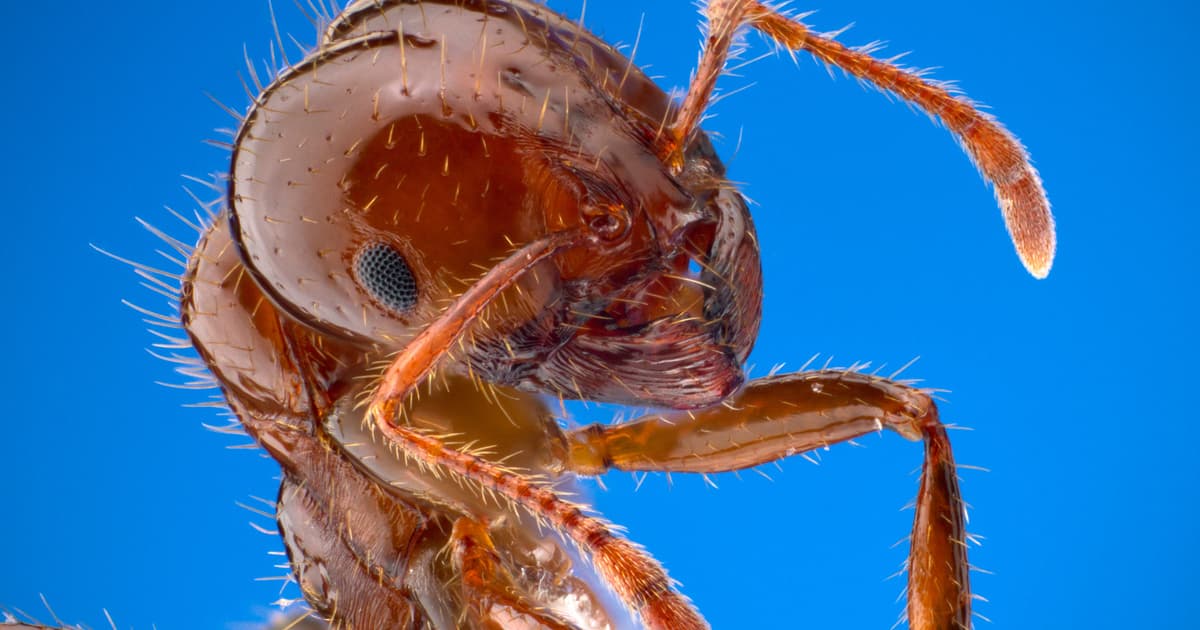
A colony shedding bees to DWV also runs short on foragers and guards. The workers holding the entrance came from the same batches the virus is thinning, and that weakness is the same opening fire ants exploit when they test a hive at the bottom board.
There’s no antiviral for deformed wing virus. No product treats it directly. The only move you’ve got is holding Varroa below the level where DWV blows up into a colony-killer. We treat at a 2% alcohol wash during brood season, the aggressive end of the range. The Honey Bee Health Coalition’s varroa management guide doesn’t draw a single flat line there. Its guidance for brood season runs as a band instead. Below 2%, it doesn’t call for immediate control. From 2 to 3%, whether you treat depends on the brood-rearing phase. Above 3%, it calls for control across every phase. We don’t wait for the top of that band. Below 2% we monitor, at 2% we treat.
We walk through the whole varroa treatment in its own article. The short version is the same for every colony, no matter its size. At a 2% wash we treat, and it’s the same play every time. Oxalic acid vapor, then we pull the queen, leave the hive a couple of days queenless, requeen with VSH stock, and hang VarroxSan strips. We don’t touch Apivar or the other synthetic miticides. The mites already beat amitraz the way they beat the chemicals before it, and leaning on it just raises mites in your own yard that the synthetics can’t kill anymore. Once a wash reads over 2% in brood season, the mites down in the capped cells are breeding and passing DWV into brood you can’t see yet, so that count is measuring the virus as much as the mite.
Run a wash every four to six weeks all through brood season, and when the colony is building fast in spring, don’t let it stretch past four. Mite populations build quicker than most people expect when a colony is growing hard, and by the time a missed spike walks out as crawlers, the batch it ruined is already emerging. An alcohol wash is how you catch it while it’s still just a number.
Last season we picked up an apiary to manage after its previous keeper walked off on the landowner. Every hive in it was carrying a crushing Varroa load. That’s the DWV endpoint in the flesh, colonies riddled with mites and carrying all the virus that rides with them, and left alone another season most of them would have been dead-outs.
We didn’t do anything exotic. Every hive got the same treatment we run at home. Oxalic acid to knock the mites down, the failing queens pulled and replaced with VSH stock, and VarroxSan hung while the new brood came on. This spring we pulled better than fifty pounds of honey off every hive in that yard. The bees did the recovering once we got the mites off their backs and gave them the room to do it.
VSH, short for Varroa Sensitive Hygiene, is a Varroa-specific trait. VSH workers smell the mites breeding under the cappings and pull those infested pupae out before the mites can finish. Fewer mite mothers finish a breeding cycle, so fewer of them pass the virus into the brood, and less of it reaches the next round of bees. The genetics we breed for against Varroa are the same ones working against DWV, one brood cycle back.
None of that drops the monitoring. VSH colonies still get a mite wash, and we still treat at 2%. What changes is the baseline. They settle at a lower steady mite load under the same management, and that lower load means less virus reaching each new round of brood, season after season.
We breed for VSH and hygienic stock because it changes what threshold management is up against. Our beekeeping philosophy starts and ends with survivability, and a colony that keeps its own mites down, along with the virus they carry, is what survivability actually looks like. Watch the count, treat at 2%, and breed toward bees that need you to less. That’s the whole defense against the virus Varroa carries into every cell it uses.
Every hive we manage is held to a written standard: hygienic behavior, varroa resistance, queen veracity, and performance in Central Texas conditions. Genetics that don't hold up get replaced — not propped up.
Read Our Standards