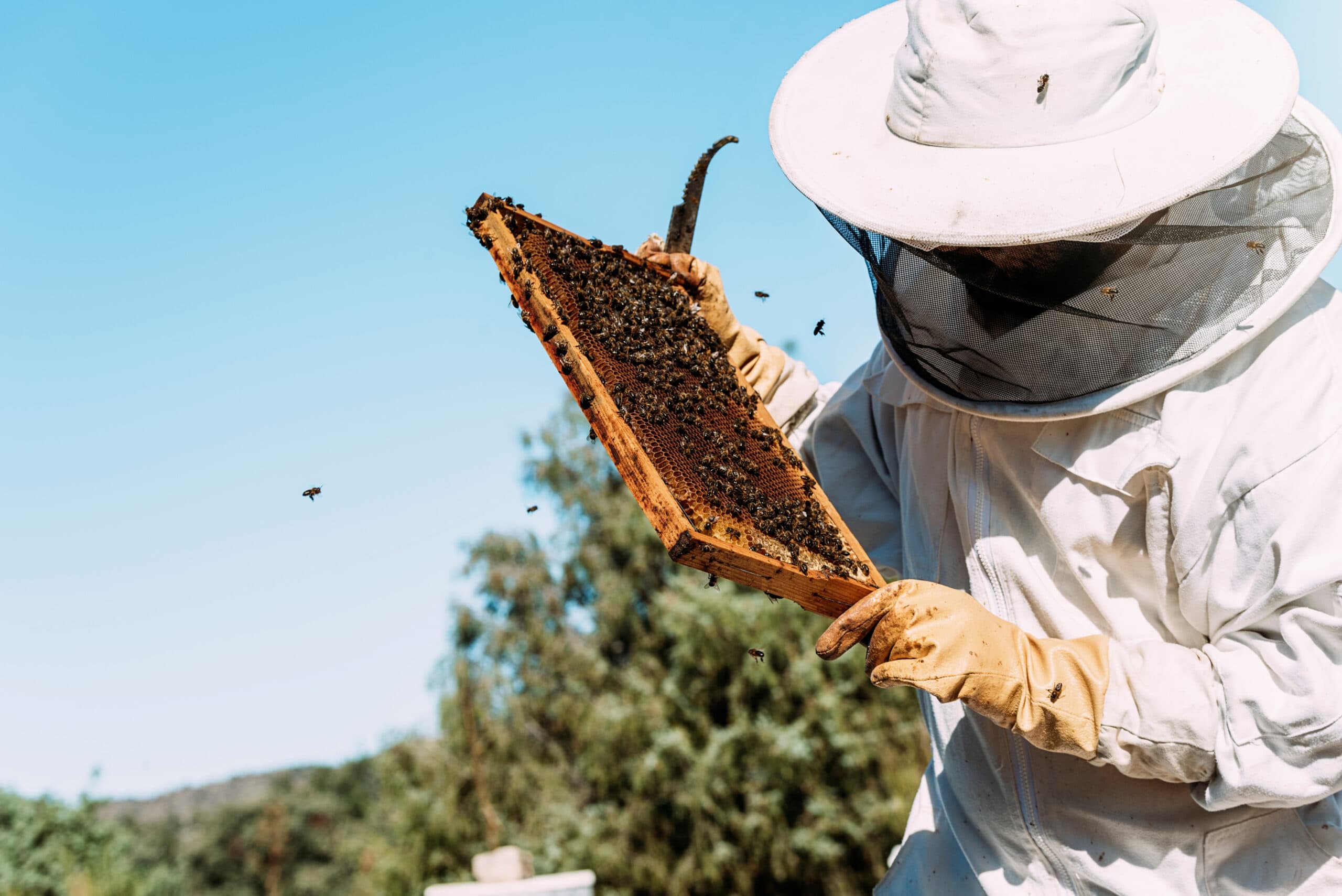
A lot of newer beekeepers inspect on a schedule and still can’t tell you what they’re actually evaluating. They pull a frame, decide it looks “pretty good” or “a little spotty,” and close the box. Knowing how to inspect a brood frame means more than that.
A brood frame is a report card. It reflects the queen’s laying performance, the colony’s health, current disease pressure, and the genetics you’ve been selecting for. Reading a brood frame means evaluating specific things. The difference between healthy and compromised brood, the disease signatures each problem leaves. What varroa looks like before the numbers spike, and what the pattern tells you about the queen.
A Solid Brood Pattern Has a Specific Threshold
Solid brood is a specific thing, not a vibe. Roughly 80% of cells in the brood nest capped. Uniform cappings at similar developmental stages, a slight dome sitting flush to the comb face. Healthy capped worker brood has a warm, slightly golden tone, and the cells feel firm if you press lightly on the surface. That’s your baseline.
What disrupts the baseline matters. Large, irregular gaps across the central brood zone are a signal. Not edge cells (every frame tapers off toward the edges, where the queen lays fewer eggs) and not the occasional skipped cell. The American Bee Journal makes the same point: the pattern reflects the queen’s performance and the colony’s capacity to care for the eggs she lays. Consistent gaps in the center of the brood nest need an explanation. Disease, a failing queen, post-swarm disruption, or extreme dearth contraction each produce a different version of a disrupted pattern. “It looks fine” isn’t an explanation.
What the Brood Pattern Tells You About Queen Status
A disrupted pattern isn’t always a failing queen. After a swarm, there’s a brood gap while a new queen establishes and starts laying, and it can span two to three weeks. A new queen’s first pattern often looks irregular before she hits full production. Post-supersedure, you might catch a transition window where two queens are briefly present and the pattern reflects that overlap. During an extreme summer dearth in Central Texas, a healthy queen may cut her laying sharply as the colony contracts to match the forage coming in.
What turns normal disruption into a queen problem is persistence. Two or three disorganized inspections in a row is a different signal. No swarm, no supersedure, no dearth severe enough to explain the contraction: at that point the queen earns a close look, not another pass.
Worker Brood, Drone Brood, and Laying Worker Cells Are Not the Same Read
Worker brood is capped flat to slightly rounded, uniform in color and texture across the face of the comb. Drone brood is capped with a pronounced bullet dome and concentrates in drone comb at the frame edges or in cells drawn to drone-cell width. Normal drone production at the right time of year isn’t a concern.
Scattered bullet-domed cappings mixed randomly through worker comb tell a different story. The more urgent distinction is laying worker conditions: multiple eggs per cell, often off-center, with irregular cappings throughout. No viable queen anywhere in the colony. A laying worker colony produces drone brood in worker-sized cells, a chaotic pattern unlike anything a healthy queen produces. Get this identification wrong and you’ll stay invested in a queenless box for weeks longer than necessary, waiting for a laying queen you no longer have, or that your bees can raise.
“Reading a brood frame to a standard is inspecting. Everything short of that is just visiting the hive.”
Empty Cells in Solid Brood Can Mean Good Genetics
Not all empty cells are problems. Hygienic colonies detect and remove compromised brood from capped cells before those bees emerge. On the frame, this looks like small clusters of recently emptied cells within otherwise solid brood. A targeted removal pattern, not random gaps spread across the comb face.
The signature is specific: clustered, repeatable removal, concentrated rather than scattered. A cluster of emptied cells where solid brood sat at the last inspection, with the surrounding pattern holding, is a colony expressing a heritable trait worth preserving. It’s also what brood pattern actually tells you about queen quality: the queen laid those cells, and the workers pulled what didn’t pass. Random thin gaps spread evenly across the whole comb face are a different signal entirely. That scattered, patchy look points back at the queen or the brood itself: a failing or poorly mated queen, an inbred queen whose unviable eggs get cleaned out and leave a shot pattern, or disease and mite pressure thinning the brood after the fact. Investigate that before you credit good genetics.
Disease in the Brood: AFB, EFB, and Sacbrood Each Leave a Specific Signature
American Foulbrood produces sunken, dark, greasy-looking cappings with irregular holes punched or chewed through. The defining field test is the ropy string pull. Insert a twig or matchstick into a suspect cell and slowly draw it out. Healthy brood breaks clean. AFB brood strings out in a ropy, elastic thread, sometimes an inch or more. The smell is distinct from the mild, clean smell of healthy brood: sweetly rotten, faintly foul. Once you’ve smelled it, you know it.
Reporting AFB in Texas is mandatory. You’re legally required to notify the Texas Apiary Inspection Service at the first suspicion of American Foulbrood, not after you’ve confirmed it yourself. TAIS confirms the case by lab test, then orders the infected hives destroyed and quarantines the apiary for a 30-day re-inspection. Burning the colony and equipment is the method TAIS recommends as most effective. This isn’t a manage-through-it situation, and it isn’t optional. The full American Foulbrood entry covers the rest.
European Foulbrood kills larvae before capping. Affected larvae appear twisted in their cells, discolored from cream to yellow to brown, with a sour-milk smell distinct from AFB. The pattern is less systematic than AFB, and the disease is typically less fatal to the colony, though a heavy infection in a weak colony can cascade. Sacbrood, a virus, produces larvae that die after the bees begin to cap them. Pull a suspect cap and you’ll find a fluid-filled sac rather than a healthy pupa. Dadant’s brood disease guide covers the visual distinctions across all three. Sacbrood usually resolves on its own in a strong colony with good genetics. AFB doesn’t resolve. For the full management picture on each, see the honey bee pests and diseases guide.
How to Inspect a Brood Frame for Varroa Before the Numbers Spike
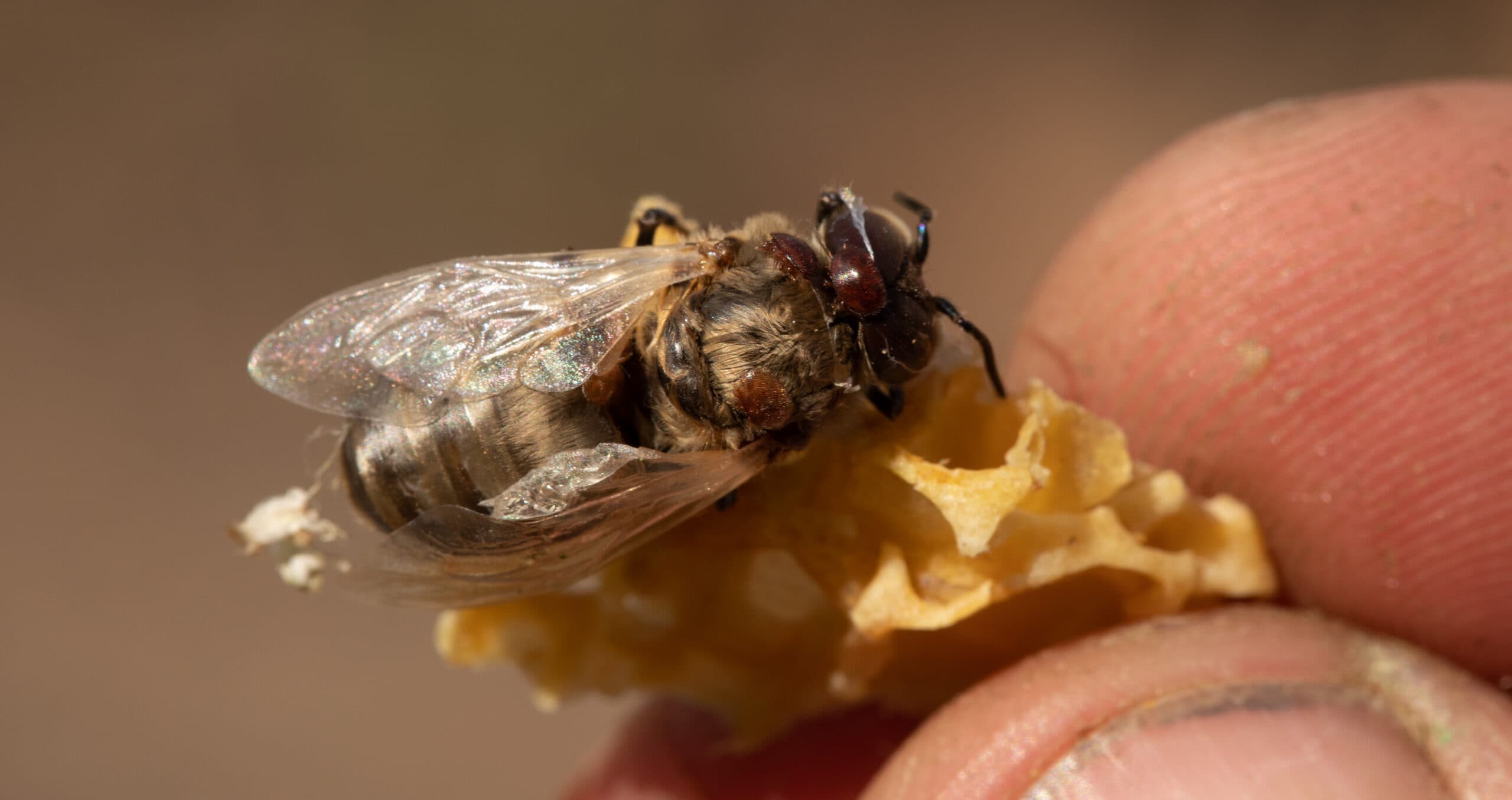
Varroa is visible in the brood before a wash count forces your hand. Mites show up in open cells alongside white, curved larvae in late instar stages. A small reddish-brown oval sits at the base of the cell, next to the larva. Deformed wing virus shows on newly emerged bees at the entrance or on the landing board: crumpled, undersized wings, sometimes reduced to stubs, bees that can’t fly. It’s a consequence of varroa parasitism during pupal development. Seeing DWV means the mite load has already been doing real damage for a while.
The visual in the frame isn’t the treatment trigger. A mite wash count is. But finding varroa in the brood tells you to run that wash immediately, before you’d otherwise schedule one. The decision to treat follows from the count, not the frame. But what to do when you find varroa signs in brood starts with the warning the brood gave you.
Inspect on a Schedule, Record What You Find
A brood frame inspection only tells you something if you’ve got something to compare it to. An inspection you don’t record isn’t an inspection. What the brood looks like today is useful only against what it looked like last time. Record the pattern, whether you spotted the queen, any disease signs, the mite wash count if you ran one, and what you did about it. Four data points a visit is enough. A log entry that takes three minutes beats one that takes thirty and never gets written.
Inspecting every seven to ten days through the brood-rearing season gives you enough data points to see trends instead of reacting to single snapshots. That consistency is what makes the frame readable, and it’s why we inspect on a schedule, not a feeling. With a record behind you, the frame tells you what it means. Without one, you’re reading it cold every single time.