Genetics
The Difference Between Hygienic Bees and VSH
Not all hygienic bees are VSH, and for varroa management in Texas that difference matters. Here’s the practical split between hygienic bees vs VSH.
Most beekeeping operations don’t run a real queen quality assessment. They glance at the brood pattern a few weeks after introduction, decide it looks solid, and move on. Calling that evaluation is generous. It grades the colony on the easiest thing to see and trusts that to stand in for genetics a frame can’t show you.
You pay for it later. A Texas summer settles in, varroa pressure climbs, and the colony you signed off on starts to slide. By then that queen has spent a full season laying daughters across the yard, and whatever she carried went into all of them.
Every queen earns her place in this operation by clearing a defined evaluation, scored on the colony she heads. It comes down to a set of thresholds her colony either meets or it doesn’t, starting with the trait that keeps a colony alive in this climate and ending with the one most people lead with.
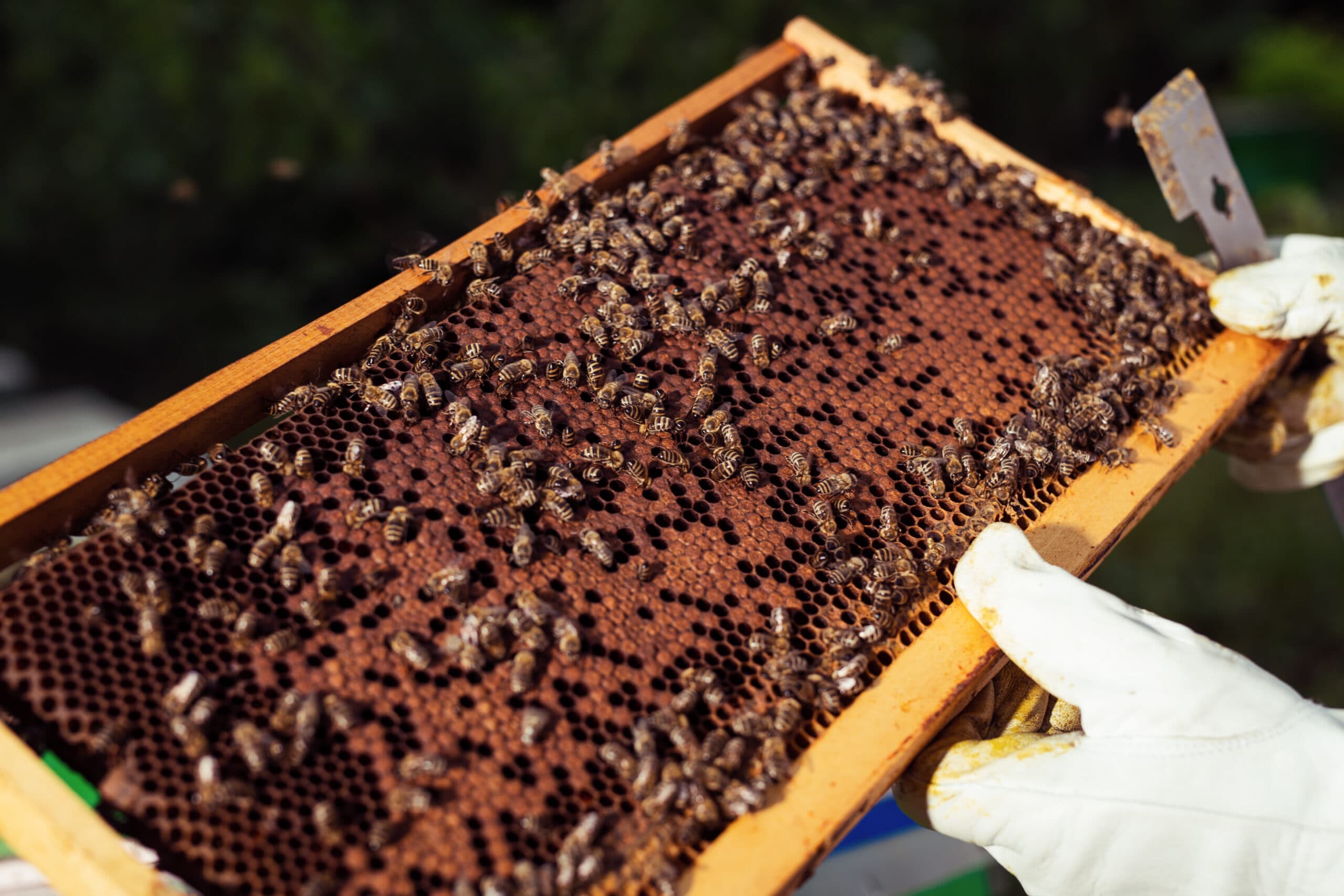
A compact, solid brood pattern tells you real things. The queen is laying well right now, the nest is healthy, and the workers are keeping it in order. What it can’t show you is whether her daughters will find and pull varroa-infested brood out of the cells before the mites finish breeding. That trait is heritable, and in Texas it carries more weight than almost anything else you can select for.
So a good pattern is a reason to look closer, and nothing more. Lean on it as your main quality signal and you’re grading the colony on the one measure that costs nothing to read. Hygienic behavior and VSH are two different traits, and the whole evaluation hinges on telling them apart.
We score general hygienic behavior with a pin test, run on the colony the queen heads in an evaluation nuc. Find a frame with a tight patch of capped worker brood, pierce a defined block of those cells with a pin to kill the pupae inside, and set the frame back in the hive. Come back in about 24 hours and count how much of the killed patch the workers have uncapped and carried out. Our bar is 90 percent removal on that single read. A colony that hits that mark is showing the hygienic response we breed toward. One that leaves dead brood capped is a requeening candidate, whatever else the hive has going for it.
The freeze-killed brood assay is the lab-grade version of the same test, killing the patch with liquid nitrogen instead of a pin. It reads the same trait the pin test reads. We run the pin test in the yard because it takes nothing but a pin and a day, and it tells us what we need to know.
A pin test scores general hygiene, and general hygiene is broad. It doesn’t, on its own, confirm Varroa Sensitive Hygiene, the narrower trait where workers single out and remove pupae with reproducing mites under the cappings. VSH is what pulls mite counts down between treatments, so we verify it on its own terms. Our breeding stock traces to VSH-selected lines, and we run a VSH assay on the queens we raise in house to confirm the trait carried through. That trait and its assay trace to John Harbo and Jeffrey Harris at the USDA ARS lab in Baton Rouge. We run both tests.
“Every queen has to earn her place on the pin test. A colony that looks perfect and scores poorly still gets requeened.”
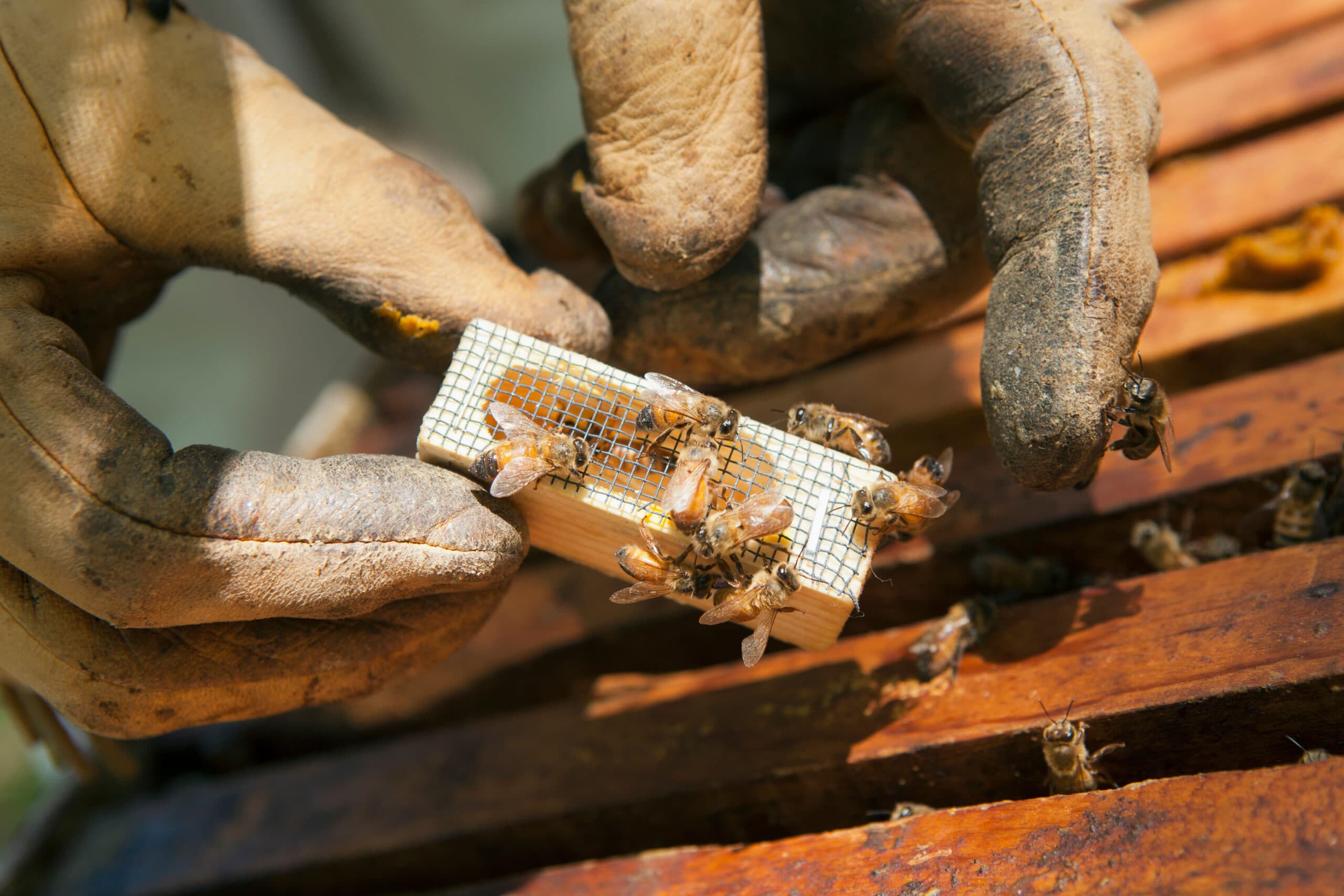
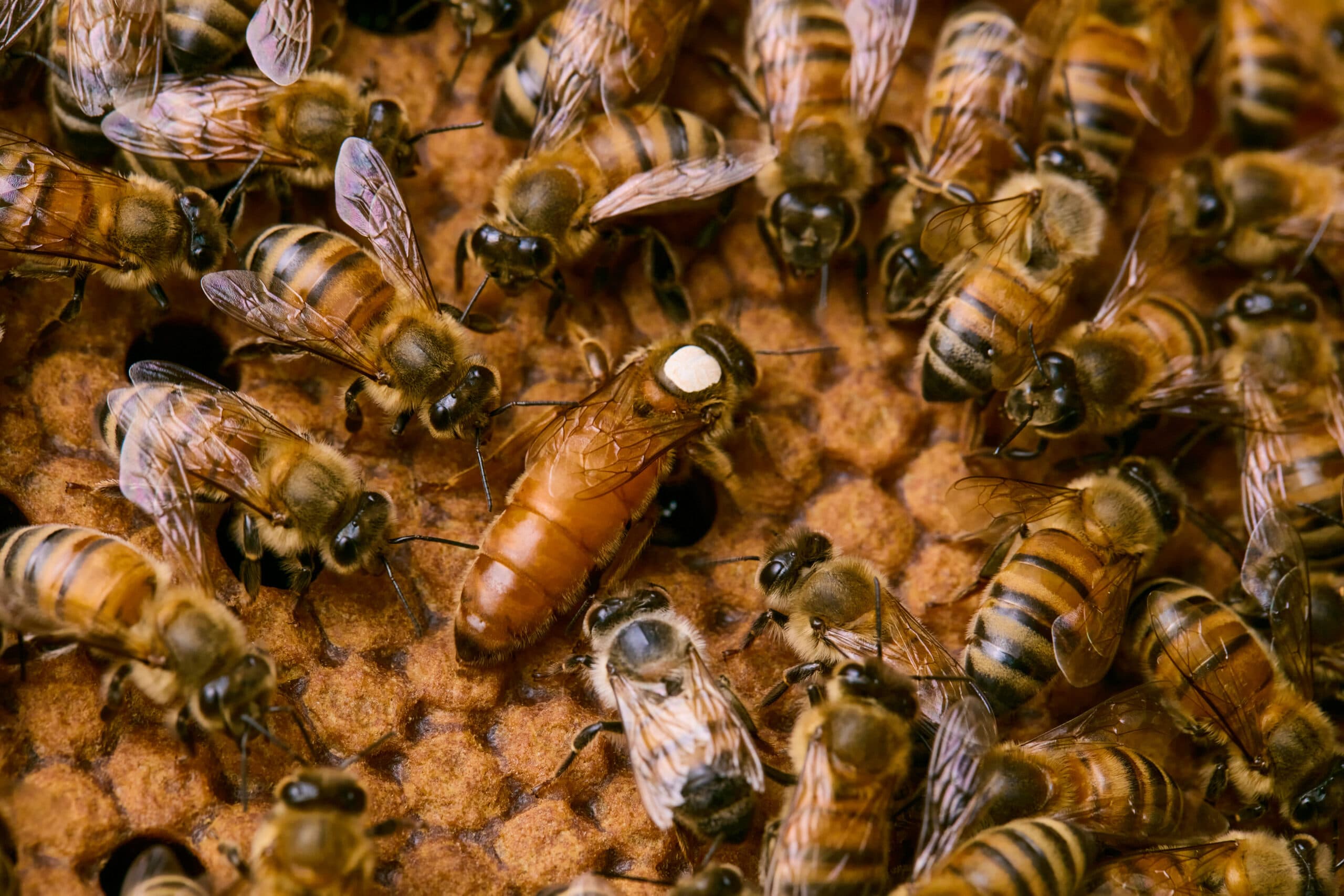
A quick visual check happens before every introduction. It takes under a minute and catches the disqualifiers that don’t need a brood test to spot. A good queen is large next to her workers, with a long, even abdomen that tapers to a rounded tip, and she moves with purpose. A queen that races across the frame and won’t settle is often poorly mated or stressed, and that’s worth noting before you commit her to a colony.
A few faults rule her out on sight. A torn wing, a missing leg, an abdomen that’s stunted or lopsided, none of that runs common from a decent breeder, but it turns up. The check clears the obvious problems so the hygiene and VSH work can do the part that actually predicts how the colony holds up.
Whether a colony accepts a new queen is a signal of its own, as long as you read it right. A single rejection tells you very little. Colony timing, a laying worker, the introduction method, even the weather that day can sink an introduction that had nothing to do with the queen. Read one failure as noise.
A queen who fails in two or three healthy queenless colonies running back to back is a different story. Hold the introduction method and the conditions as steady as you can, and that pattern turns into reliable information. We treat it the way we treat a failed hygiene score, as a threshold crossed. Pull her, and bring up the next candidate.
The queen quality assessment runs in a fixed order. Hygiene and VSH come first, physical soundness second, temperament third. That order is deliberate. We still requeen the gentlest hive in the yard if its queen fails the hygiene score.
That’s harder than it reads. A calm, heavy-producing colony is a genuine pleasure to work, and the pull is to write off a bad score as a fluke and let the hive’s other strengths carry it. They can’t. A sweet queen with weak hygienic genetics hands that weakness to every daughter she lays, and you’ll be managing the fallout for two or three years. Temperament still counts here. We won’t keep a colony you can’t open and work without it turning into a fight. The order exists because the comfortable call is usually the wrong one.
These tests are simple. Keeping up with them is a nuisance, and the nuisance is what stops most people. Scoring hygiene means deliberately killing a block of healthy brood that would have become workers, then timing it around the brood cycle so a good capped patch is ready when a queen comes up for evaluation, then going back a day later to count what got cleared instead of trusting an impression. Each step is small, and stacked together they’re more bother than glancing at a frame, so the glance wins.
That’s how a queen quality assessment shrinks down to brood pattern and a gut feeling, which is fast, painless, and close to useless as a read on genetics. We run the tests because skipping them means breeding unverified queens into every hive in the operation and calling it management. Done right, the work gives you colonies that hold their own mite load between treatments and come through a Texas summer. That’s what good genetics looks like at the colony level. Skip the evaluation and you’re not selecting for it. You’re hoping it turns up on its own.
Every hive we manage is held to a written standard: hygienic behavior, varroa resistance, queen veracity, and performance in Central Texas conditions. Genetics that don't hold up get replaced — not propped up.
Read Our Standards