Most beekeepers treat requeening as a judgment call. For us it’s a number. When a wash hits two percent in the brood season, we treat that colony and requeen it. There’s no second round coming, because the queen that let the mites get that far doesn’t go back in the box.
Most of the second-guessing over whether to requeen or run another treatment comes from treating the two as separate calls spread across a season. For us, they’re one call. The wash number says the colony can’t hold its own mites down, and no strip changes the genetics the queen hands her daughters. A new queen does.
Another Round of Miticide Only Buys Time
Even the treatment side is losing ground. Amitraz, the active ingredient in Apivar and the synthetic most operations lean on, is showing resistance in US yards, the same road fluvalinate and coumaphos went down before it. For that reason, among others, we don’t run it.
Set the chemistry aside and the deeper problem stays. A treatment knocks the current mites down but leaves the bees that let them build. That colony is back where it started by August, and you’re another treatment poorer. The mites return because the queen who couldn’t hold them down is still laying. And the hard synthetics take their own toll going in. More beekeepers every year are watching a hard treatment kill bees along with the mites and leave the colony weaker than it started.
We Wash the Bees That Can’t Fly Off
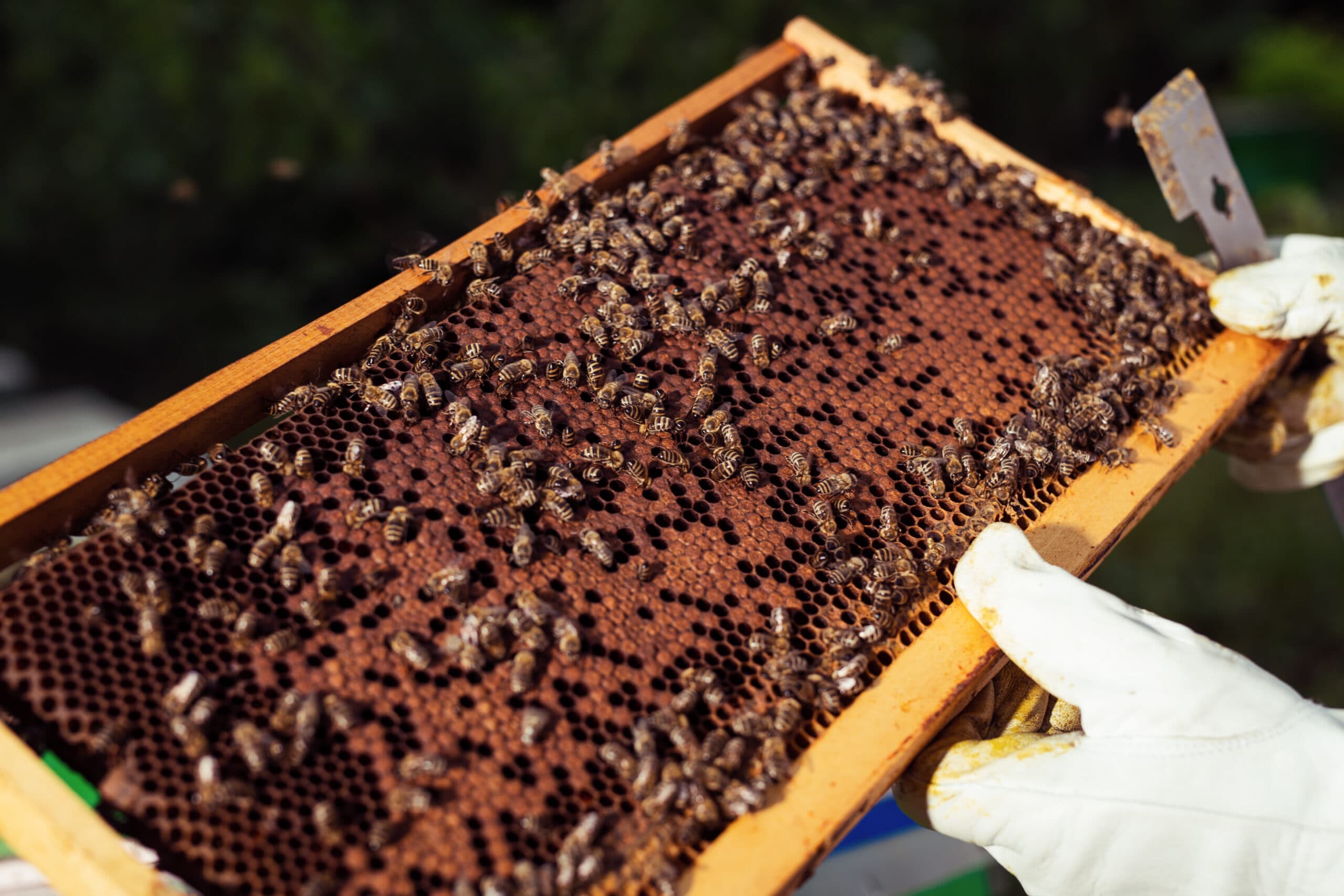
Whether that wash points at the queen or just bad luck depends on which bees you wash, and we get ours by shaking a brood frame hard. The foragers lift off and head home. The young ones aren’t flying age yet, so they can’t follow, and they’re what stays in the bin to be scooped and washed.
That sort does two things for the count. The bees left behind are the ones covering the brood, and that’s where varroa ride heaviest, far more than out on the foragers, so washing them catches a building load early instead of missing it. The Honey Bee Health Coalition’s varroa guide sends you to the brood combs for the sample for the same reason. And they’ve never been out foraging, so they can’t have carried mites home from robbing a dying hive. That keeps a fresh mite bomb from moving the count much.
It isn’t airtight, though. Give those robbed-in mites a few days and they migrate onto the bees covering the brood, and now they’re in the wash too, pushing the count up past what the colony’s own breeding would show. So the number is only as good as the yard behind it. In a yard of strong colonies with nothing collapsing next door to rob out, there’s no bomb to throw the count off, and a single wash tells you what you need. We keep ours that way on purpose. When the wash comes back at two percent, the colony grew those mites itself, and that’s the queen’s genetics. No amount of oxalic acid changes what she hands her daughters.
Treating and Requeening Are the Same Move
At two percent, treating and requeening are the same job. It’s our full varroa protocol start to finish, except the queen we pull never goes back in.
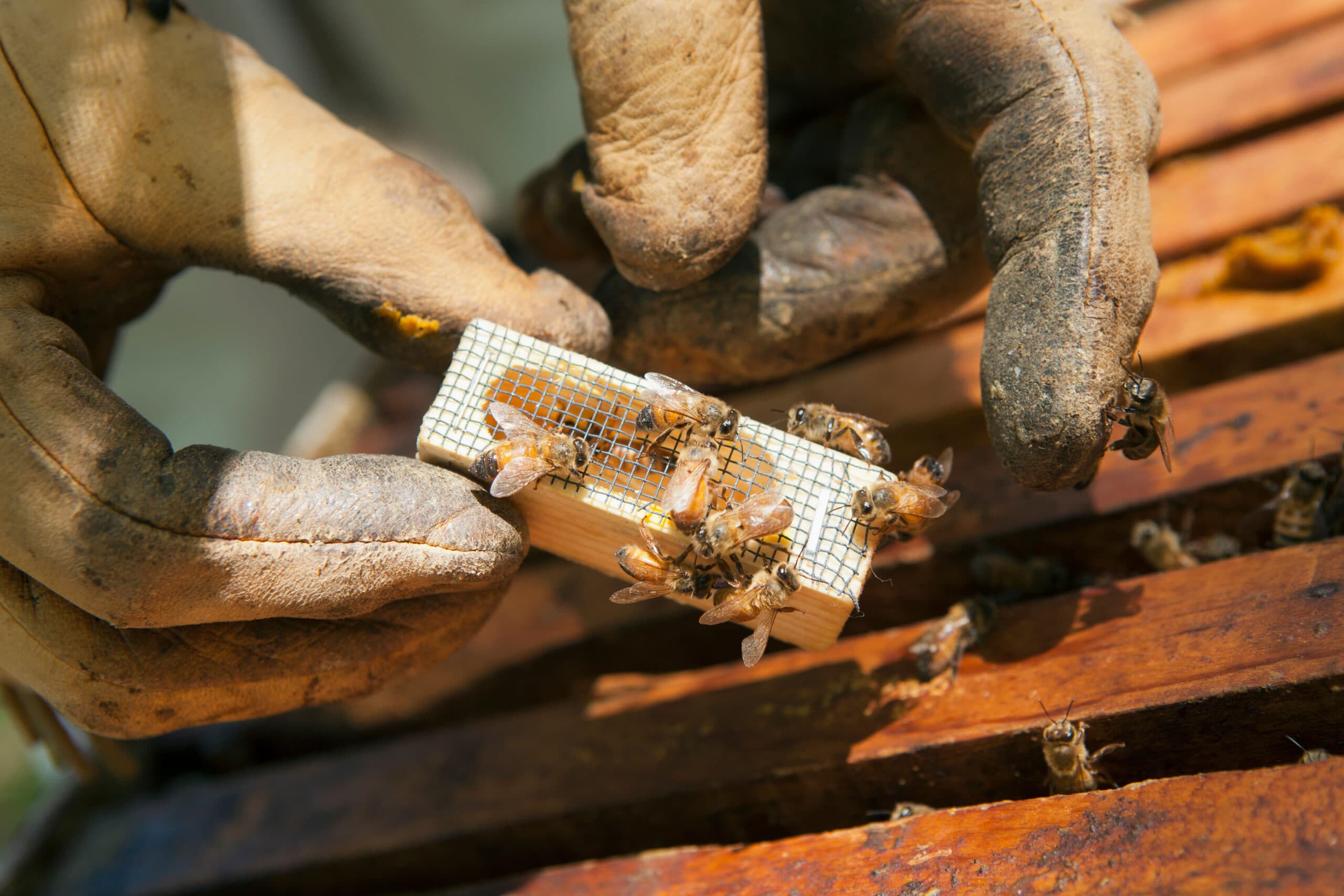
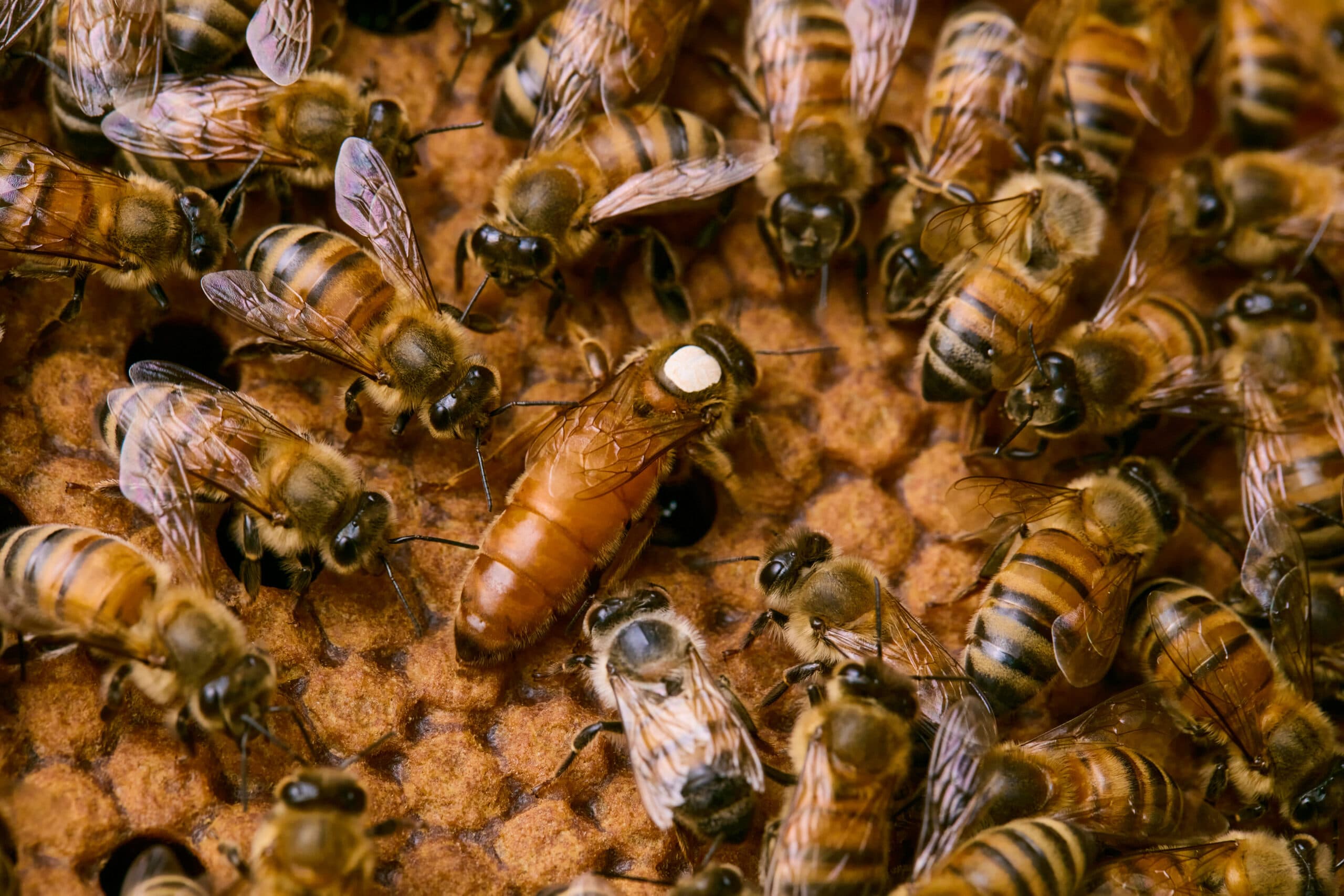
The vaporizer comes out first and knocks the mites off the bees that day. Then we pull the queen. That one act does two jobs. It starts the brood break that carries the treatment, since with nobody laying the capped brood runs out and the mites lose the cells they breed in, and it clears the box for her replacement. We hold the colony queenless a few days, set in a new queen from stock that holds its own mite load, and VarroxSan strips go in with her to keep killing mites through the weeks the last of the old brood hatches out.
Treat the hive but keep the old queen, and you’ve only reset the clock. The colony climbs back to the same count within a brood cycle or two. Pull her for good and the genetics that couldn’t hold the mites down end there. There’s no second miticide round next month, because the queen who would’ve made you run one is gone.
A hive that needs treating needs a new queen. We won’t run a colony a second time on the genetics that failed it the first.
A Requeen Turns the Whole Colony Over in Six to Eight Weeks
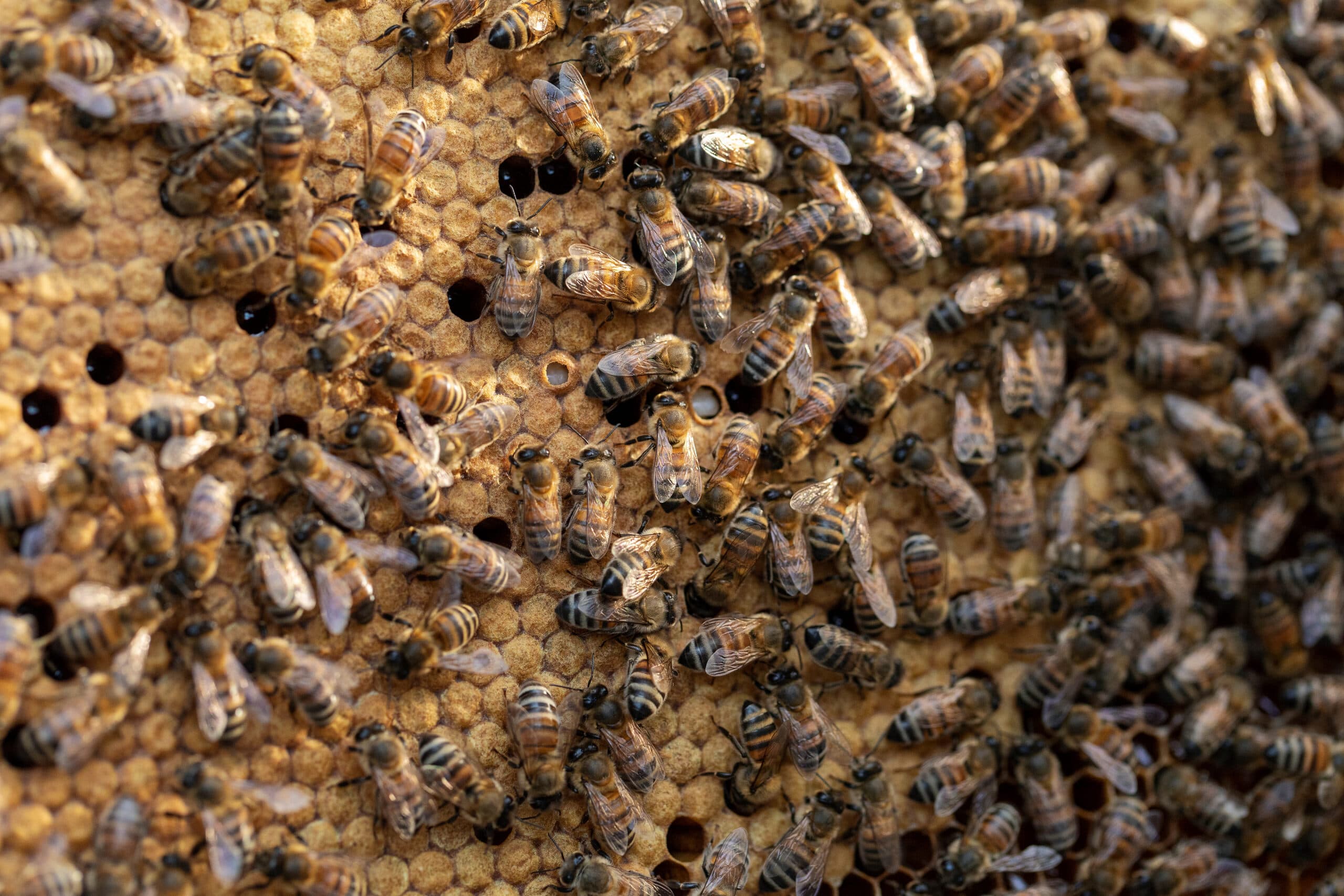
A new queen starts laying within days of the colony taking her. Summer workers live four to six weeks. Inside six to eight weeks, most of the old bees have died off and her daughters have taken their place, so the hive runs on her genetics. It shows in the hygienic behavior, the mite counts, and the brood pattern. That turnover is quicker than most people expect, which is why pulling a queen in July doesn’t cost you the season.
Timing moves acceptance. A colony already queenless in an early brood break usually takes a new queen readily. One packed and defensive in the middle of a honeyflow fights her. Spring and early fall give the best odds in Texas. The mechanics take an afternoon to learn. Pulling a queen you’ve kept for years is the part that stops people.
We Raise Our Own Queens
A queen is cheap when you raise your own, and we do. Most people weigh a new queen against a season or two of miticide strips. We run no Apivar and no synthetics, so that’s not the trade we’re making. Ours is between a queen out of our own yard and the honey crop we lose propping up a colony that can’t hold its mites down.
The bigger cost is the honey you don’t make. A hive you’re treating just to keep it breathing spends the summer managing mites instead of putting up a surplus. The strong hive next to it, holding its own mites down, makes the crop. Across a couple of seasons the gap between those two runs to more than a queen ever costs, and it only widens the longer the weak one hangs on. Even if you buy your queens instead of raising them, a good one costs less than a couple seasons of Apivar and the honey a weak colony bleeds away.
The Hard Part Is the Attachment
The mite wash doesn’t care how long you’ve kept the colony, and neither should you. A three-year hive with a soft temperament gets the benefit of the doubt a new one never would. Give a weak line that benefit long enough and it never leaves the yard. If the wash hit two percent, she’s a requeen, no matter how gentle she is or how much honey she’s put up. What strong Texas stock actually looks like is the bar you’re measuring her against.
The queen going in her place is a step up. Our foundation stock traces back to BeeWeaver, one of the founding Texas breeding lines, and we keep folding outside genetics in over the years to hold the diversity. Every queen we raise off that stock earns her place before she heads a colony, so the swap moves the yard forward.
Make the change when the wash tells you to, and you stop running the same worn-out colony through treatment after treatment, season after season. Treat the hive in front of you, then replace the queen that got it into that state. That’s how we keep the yard strong.