Forage
Goldenrod and Bees in Central Texas
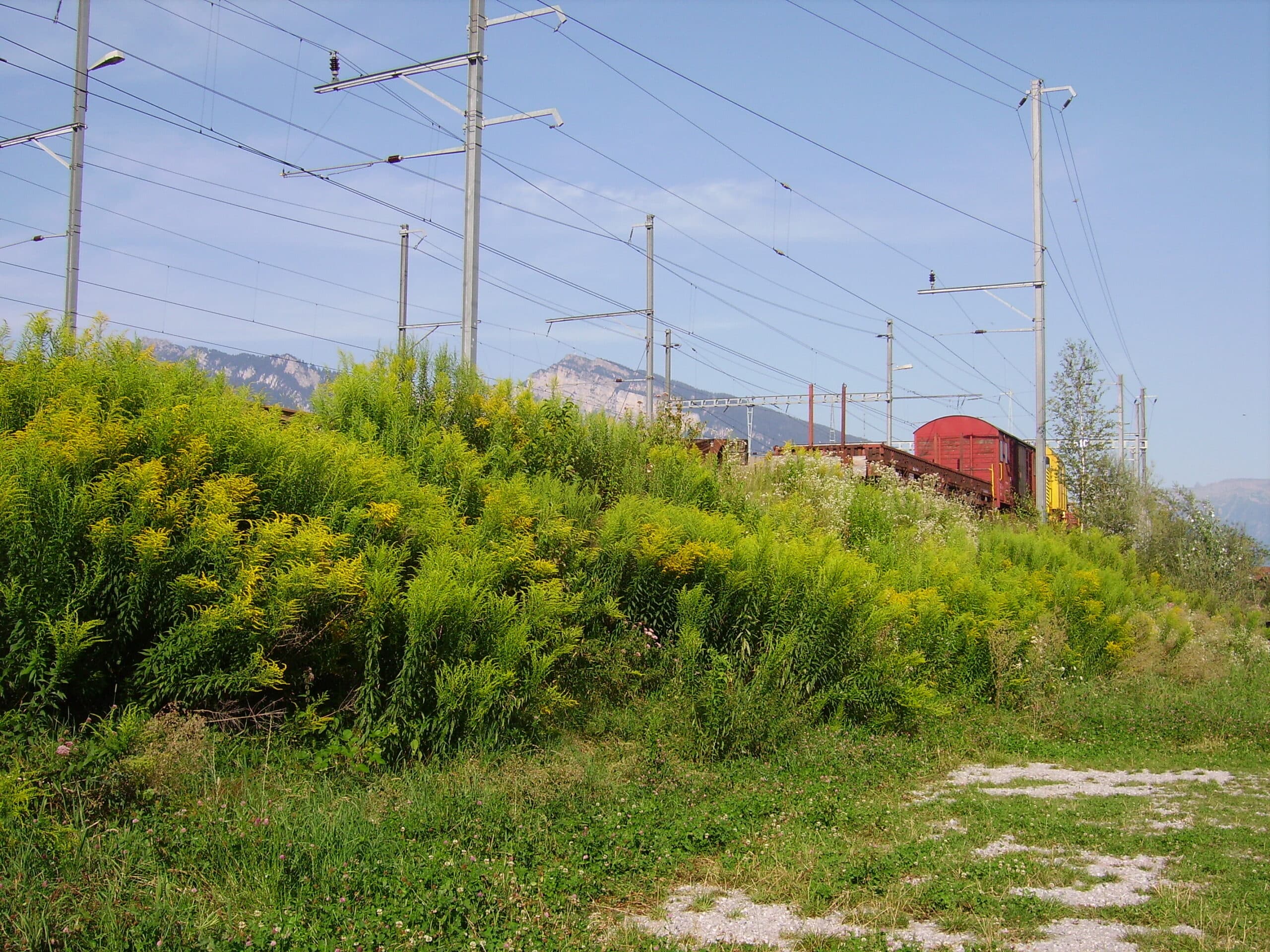
Goldenrod is among the last and heaviest flows of the Central Texas fall. Its dense late pollen builds the winter bees that carry a colony to spring, and we leave the honey on as winter feed.
Honey mesquite comes into bloom across the Texas Hill Country and the Edwards Plateau in April, right as spring colonies reach their strongest. Bees in range of a mesquite grove meet the biggest nectar event of the year with the field force to work it, and they put up surplus honey, with pollen for the brood nest alongside it.
When mesquite hits full bloom, a strong colony shows it fast. Nectar comes in heavy, the frames fill, and the hive gains weight you can feel when you lift the back of it. If a yard sits within a mile of a grove in bloom, the scale tells you the flow is on before you ever crack a lid.
Mesquite is a legume, kin to the bluebonnet in the pea family, but its bloom takes an entirely different shape. It carries its bloom in dense, creamy-yellow catkins two or three inches long. The small flowers open all along the spike with their stamens exposed, no keel to trip and no deep tube in the way. A bee works along the whole catkin, taking nectar and pollen as it goes, since both sit at the same flowers at once. That easy access is a good part of why the bloom pulls bees so hard.
The Xerces Society, a pollinator-conservation group, keeps a national list of plants with special value to honey bees, and mesquite is on it. That designation shows on the plant’s Lady Bird Johnson Wildflower Center profile, which calls it an excellent bee tree. The profile lists the bloom from February through September. The main flow here runs April through June, with a lighter second bloom in midsummer.
What we pull off the spring flow is a light amber honey, mild and slightly sweet, with a clean finish. We take it in late May or June, once the flow winds down and the boxes are capped. What you take off it rides on the winter and spring rain. A wet year brings a heavy flow, a dry one almost nothing.
When mesquite comes into bloom in April, a strong colony at peak population can gain several pounds of nectar a day while the bloom holds. It takes a full field force to bring in that kind of weight. A colony that built up hard over late winter and early spring meets the flow ready to work it. One that came into April light will still forage the bloom, but it can’t move the volume a full-strength colony does, and it shows in what each puts in the box by June. We super ahead of it, because a strong hive fills a box faster than you expect once the catkins open. Fall behind and a heavy flow can leave a colony nectar-bound, the brood nest packed with honey and no room left for the queen to lay.
A colony hits the mesquite flow only as strong as the early forage let it grow. Huisache comes first in January, mountain laurel follows in February, and the bluebonnets put up pollen through March. Those early blooms keep the queen laying and the brood spreading through the lean weeks, so that by April the colony has the field force to work the flow. Feed a hive steadily from January on, and it meets mesquite with bees to spare.
That’s how we run it. We push colonies to build up through the winter and early spring, so we come into the mesquite flow with the biggest, strongest colonies we can, and split off the population once the honey’s off.
A good mesquite year fills the supers by June, and the colonies come off it stronger than they went on.
Mesquite often blooms twice. Once the spring flow has set its beans, a second, lighter bloom comes on in the middle of summer, especially after a good rain, and the bees go right back to the catkins. It brings in less than the spring flow, with colony populations down from their May peak, but the bees still work it for real forage.
A rebloom stretches the season. A colony that came out of the spring flow with full boxes gets another push of forage, and nectar coming in through the summer holds off the need to feed and keeps protein stores up while the colony settles toward winter. Watch for it after the rains. A wet summer can put real weight on before fall.
Mesquite is the brush plant Texas ranchers know best. It comes up fast on overgrazed and disturbed soil and pulls water from pasture grass, and keeping it in check is a standing expense across the Hill Country and South Texas. Texas A&M AgriLife Extension keeps a mesquite management guide covering mechanical removal, herbicide, and prescribed fire. Cut it back or top-kill it and it resprouts from the base, so control is rarely a one-time job.
On a place with hives, clearing has a forage cost too. The spring flow runs on whatever mesquite groves sit in foraging range, and taking them out changes the April-through-June calendar for those colonies. The bees will forage other blooms, but a mesquite grove in range fills supers faster than anything else they reach in spring.
The groves worth keeping are on the caliche flats and in the creek draws that never carried useful grass. Those cost the pasture nothing and give the colonies their strongest forage of the year. Save the heavy clearing for the groves taking over pasture you graze.
Prosopis glandulosa is native from Texas west into New Mexico and Arizona and south into Mexico. In Central Texas it grows on rocky soils and caliche flats and turns up thick across the Hill Country, the Edwards Plateau, and the South Texas Plains. Creek draws, fence lines, and disturbed soil carry mesquite across millions of acres. Most landowners in the Hill Country already know this tree, drought-hardy and stubborn once it takes hold.
You can pick it out by the low, gnarled, multi-stemmed trunk and the feathery leaves. The leaves are twice-divided into small paired leaflets running down paired stems, with a stout thorn at each node. In April the creamy-yellow catkins emerge along the new growth, and the long pods that follow through summer are one of the most familiar sights in the Texas brush country.
Bloom season: April through June, with a lighter second bloom in midsummer once the spring bloom has set its beans.
Forage value for honey bees: Major spring nectar source, one of the strongest in Central Texas. Strong colonies put up surplus honey off it in a good year. Light amber and mild.
Native status: Native tree, Prosopis glandulosa, Fabaceae. Widespread across the Hill Country, Edwards Plateau, and South Texas Plains.
Mesquite is the biggest nectar flow of the year in Central Texas. The full wildflower library covers what leads up to it and what comes after, from the first January blooms to the fall.
The first of those early bloomers is huisache, which feeds a colony back in January, months before the mesquite catkins break.
A property with mesquite in foraging range holds the best spring forage this part of Texas offers. When we put hives on a landowner’s place, a strong mesquite grove is one of the first things we look for.
Every hive we manage is held to a written standard: hygienic behavior, varroa resistance, queen veracity, and performance in Central Texas conditions. Genetics that don't hold up get replaced — not propped up.
Read Our Standards