Forage
Goldenrod and Bees in Central Texas
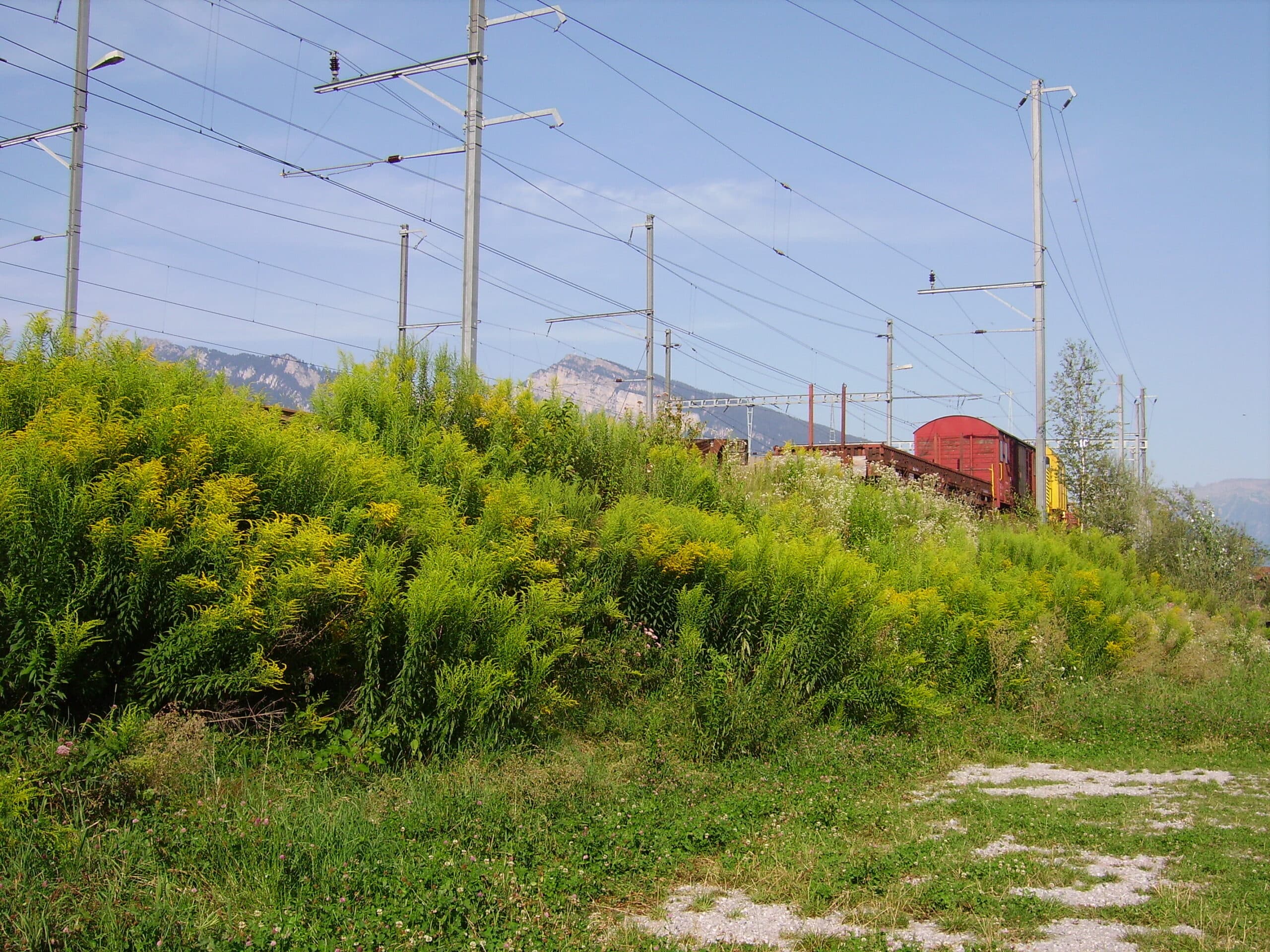
Goldenrod is among the last and heaviest flows of the Central Texas fall. Its dense late pollen builds the winter bees that carry a colony to spring, and we leave the honey on as winter feed.
In Central Texas, prairie verbena is a nectar plant our bees work most of the year and never turn into honey. It’s flowering in March while the colonies are building, and it’s still going in October after most everything else has finished for the year, one of the longest runs of anything in this library. The Lady Bird Johnson Wildflower Center lists Glandularia bipinnatifida as a nectar source but doesn’t carry it in the Center’s honey bee plant collection, and it holds no special-value rating for bees of any kind. To a colony it’s modest, steady forage, a little always coming in across the stretches when the big plants have quit.
Most forage plants give a colony one window. The spring bloom runs in order, huisache in January, mountain laurel in February, bluebonnet pollen in March, then the mesquite flow from April into June. Each is a short season, a few weeks and gone. This one runs long. It comes into bloom in March with the bluebonnets and keeps going through the spring and the summer dearth, right up to when goldenrod comes on in the fall. The Wildflower Center’s species profile puts the bloom from March into October.
On any single day the bees don’t take much off it. There’s no flow in it, no week the boxes gain real weight. It just keeps blooming, month after month, and a thin, steady dribble keeps foragers flying and gives the queen a reason to keep laying through the lean stretches.
Prairie verbena runs from March clear into October, filling the gaps the big flows leave. Modest forage, and the bees are on it all season.
The flowers are small and five-petaled, purple to lavender-pink, in clusters at the tips of the stems, each with an open tube at the base holding the nectar. There’s no vibrating the flower to shake the pollen loose, the way a bee has to on a tomato or an eggplant. Any bee can work it, and our honey bees do, right alongside the native bees and bumblebees. A forager lands, works the cluster, and moves to the next.
Through the summer dearth, when horsemint is working the same weeks and little else is open, the colony takes whatever it can reach, and a thick patch of verbena will have bees on it through the day. On a warm afternoon you’ll find a few of our bees to a patch, working it steady while it lasts.
It’s a distinctive little plant, and you learn its look fast. It grows low and spreading, up to about sixteen inches, often lying in a mat across bare, open land. The leaves are deeply cut and almost fern-like, a little rough to the touch. The flower clusters sit at the tips of branching stems, bright purple to lavender-pink, and the color runs deeper in some patches and lighter in others. Up close, each cluster is a gently rounded dome of small tubular flowers. Color aside, you go by the cut leaf and the low, sprawling growth. A good patch in full bloom is a low purple wash over a bare pasture, easy to pick out from the road. Once you’ve spotted it, you’ll notice it all over the county roadsides through the warmer months.
It grows across most of Texas, common on rocky prairie, roadsides, caliche flats, and open pasture. It wants well-drained soil over caliche or limestone, and open sites in sun or part shade. It won’t take soggy soil or heavy shade, which is why you find it out in the open and not down in the creek bottoms. Nearly any apiary in the region already sits within range of a patch or two, common enough on open land that it goes unnoticed until you start watching what the bees are actually on.
It’s a perennial here. The same roots come back every spring, which sets it apart from horsemint, an annual that grows back from seed every year. Once a stand takes hold on a site, it stays put, filling the same spot year after year.
On the right site it plants itself. Rocky, open, well-drained land is exactly what it wants, the kind of sunny spot that won’t carry improved pasture grass and never needed watering. It’s drought-tolerant, and deer tend to pass it by, both of which matter on most Central Texas land.
If you do want to seed a patch, broadcast it in the fall, after the first cold front comes through. Scratch it into the surface for good seed contact and let the fall rains bring it up. A patch that takes will fill in and spread on its own from there. But the cheapest way to get more of it is to quit mowing and spraying the places it already grows. Along caliche roadsides, rocky pasture edges, and the rough patches that never grew much, it shows up on its own where nothing cuts it down during bloom. Leaving those spots alone costs nothing and feeds every bee that ranges over them, right through the season.
Bloom season: March into October. One of the longest bloom windows in this forage library.
Forage value for honey bees: Modest, steady nectar across a long season. No surplus off it. Native bees, bumblebees, and honey bees work it the whole while it’s in bloom. Its value to a hive is staying open when little else is.
Native status: Native perennial, Glandularia bipinnatifida, Verbenaceae. Widespread across most of Texas.
Prairie verbena fills the seams between the plants that carry the flows. It’s open when the spring flows come in, on through the summer dearth, and still going into the fall when goldenrod comes on.
For how it fits with the rest of the year’s forage, see the Central Texas wildflower library. The USDA PLANTS database has its full range and native status.
For a landowner hosting managed hives, a plant like this is easy to miss and easy to keep. It costs nothing to leave standing, and the bees are better for having it there. That quiet, no-work forage is exactly what we count when we size up a property for hives, and it’s part of how we work with landowners.
Every hive we manage is held to a written standard: hygienic behavior, varroa resistance, queen veracity, and performance in Central Texas conditions. Genetics that don't hold up get replaced — not propped up.
Read Our Standards