Forage
Goldenrod and Bees in Central Texas
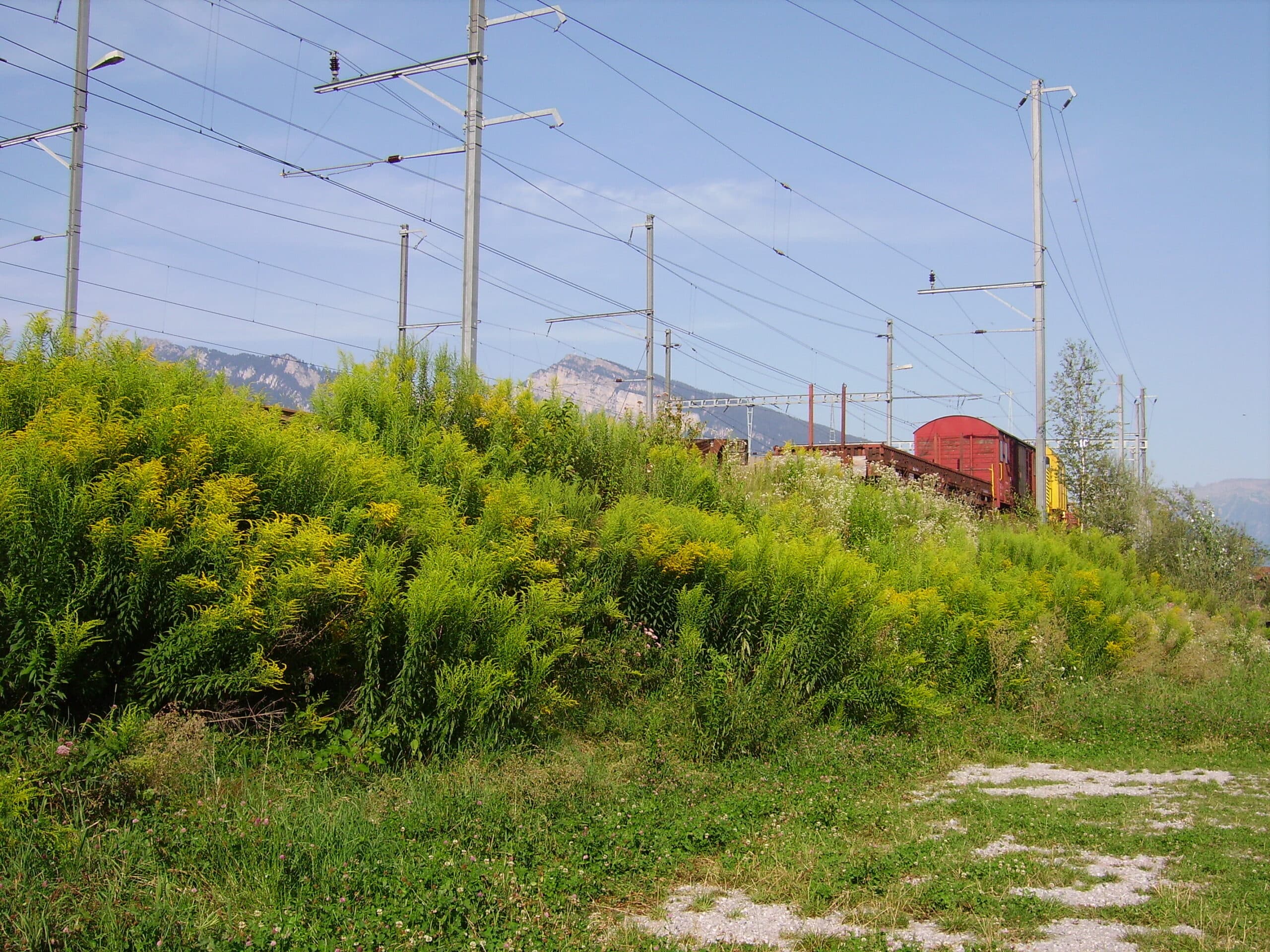
Goldenrod is among the last and heaviest flows of the Central Texas fall. Its dense late pollen builds the winter bees that carry a colony to spring, and we leave the honey on as winter feed.
Every March the Central Texas roadsides go blue and the bees pile onto them. What they’re taking off the bluebonnets is pollen, not nectar. A spring field of Lupinus texensis feeds your colonies protein for brood. It won’t put a drop in the honey super. Knowing the difference keeps you from misreading a March hive.
Bluebonnet is a legume, and it carries the classic pea-family flower. The pollen sits sealed inside the keel, the folded lower lip of the bloom. It only works loose when a bee lands and presses that keel down with her weight. That takes a bee big and strong enough to spring the flower.
That favors the bigger, heavier bees. Bumblebees and the large native bees trip a bluebonnet without much trouble. A honey bee, being lighter, gets less for the same effort. The flower is a Texas native, and the bees that grew up with it are natives too. The Lady Bird Johnson Wildflower Center lists bluebonnet’s special value to native bees and bumble bees. That designation is about native-pollinator conservation. A honey bee isn’t native to start with, so it was never going to figure on it.
Despite what you may have read, bluebonnet isn’t buzz-pollinated. Buzz-pollination is the trick bumblebees use on tomatoes and blueberries. They vibrate the pollen out of anthers that stay sealed behind tiny pores. Bluebonnet’s anthers open the ordinary way. The only catch is the keel and the weight it takes to trip it.
The bloom shows its age, too. That white spot on the top petal turns red-purple by about the fifth or sixth day, with or without a bee ever touching it. Bees keep working the younger, white-spotted flowers, and for good reason. The older red-spotted ones carry pollen that’s lost its stickiness and viability, and a bee gets less out of them. The color is about the flower’s age and its fading reward, not its pollination.
Honey bees still work the bluebonnets, and they get something for it. They trip the lighter blooms themselves, and they pick up pollen the bigger bees have knocked loose on the heavier ones. They just work it less efficiently than a bumblebee would. There’s next to no nectar to chase, so what the hive carries home is pollen, and it’s worth showing up for in March.
Our own bees take early pollen off the bluebonnets most springs, but we don’t bank the spring buildup on it. It’s one early protein source among several. Good to have a patch near a yard, but not a flow we plan around.
Pollen is the protein a colony runs on coming out of winter, and that’s just when the bluebonnets show up. A hive comes out of the cold months in rough shape. Little or no brood for weeks, stores run down, the population at its yearly low. To turn that around it needs pollen coming in the door. Without a steady early supply it’s slow off the mark, and a good part of the big spring flow rolls right past it.
The bluebonnets bloom March through May across Central Texas. They run heaviest in March and April, on the Blackland Prairie and the Edwards Plateau. That puts them square in the brood-buildup window, after the winter brood gap and ahead of the mesquite that makes the real spring honey.
Bluebonnet pollen lands when a colony has the least to work with and needs protein the most. The brood it feeds becomes the bees that work the spring and early-summer flows.
You read it on the brood frame, not in the honey super. A colony working the bluebonnets shows expanding brood with pollen packed around it and nothing curing in the cells. If you go hunting a nectar flow in March and come up empty, nothing’s wrong. A pollen-heavy, brood-building hive that early is right on schedule. Leave it be, and keep your hands out of a healthy buildup.
Texas bluebonnet is a native annual. It turns up along roadsides, across open prairie, and over any disturbed ground. Its thickest stands run across the Blackland Prairie, the Edwards Plateau, and the Hill Country. The USDA PLANTS Database lists Lupinus texensis as native, its range centered on Texas and running east into Louisiana. It’s the state flower, and those big roadside sweeps you see every spring come from decades of TxDOT seeding the right-of-way.
It wants full sun and well-drained, calcareous ground. That’s the rocky alkaline soil over much of the Hill Country and the plateau. It shrugs off drought and the wild temperature swings of a Central Texas spring. Where the native habitat’s intact, it reseeds itself and comes back every year on its own. Compacted, overgrazed ground and a thick mat of improved pasture grass crowd it out. A place that’s kept its native cover carries more bluebonnet, and better early forage, than one buried in coastal bermudagrass.
It’s easy to spot. Palmately compound leaves, usually five leaflets and sometimes more, on a plant six to eighteen inches tall topped with a dense spike of blue. That spike and that color are what turn the roadsides blue every March. For the full identification, range, and pollinator detail, see the Lady Bird Johnson Wildflower Center profile of Lupinus texensis.
Bloom season: March through May, heaviest in March and April.
Forage value for honey bees: Pollen. Honey bees visit and collect it but are not the plant’s main pollinator. Little to no nectar.
Native status: Native annual, Lupinus texensis, Fabaceae. The Texas state flower.
If you run hosted hives on your land, you don’t have to plant bluebonnets. They’re native and they reseed themselves, so on decent ground they come back without you. You can sow them if you’d rather, and the Wildflower Center keeps a guide for it. Mostly, though, you’re just reading whether the native cover’s intact or worn, and managing for that. Where the bluebonnets set themselves, ease off the grazing from late winter into spring so they can bloom and go to seed. The early forage improves, and it costs you nothing.
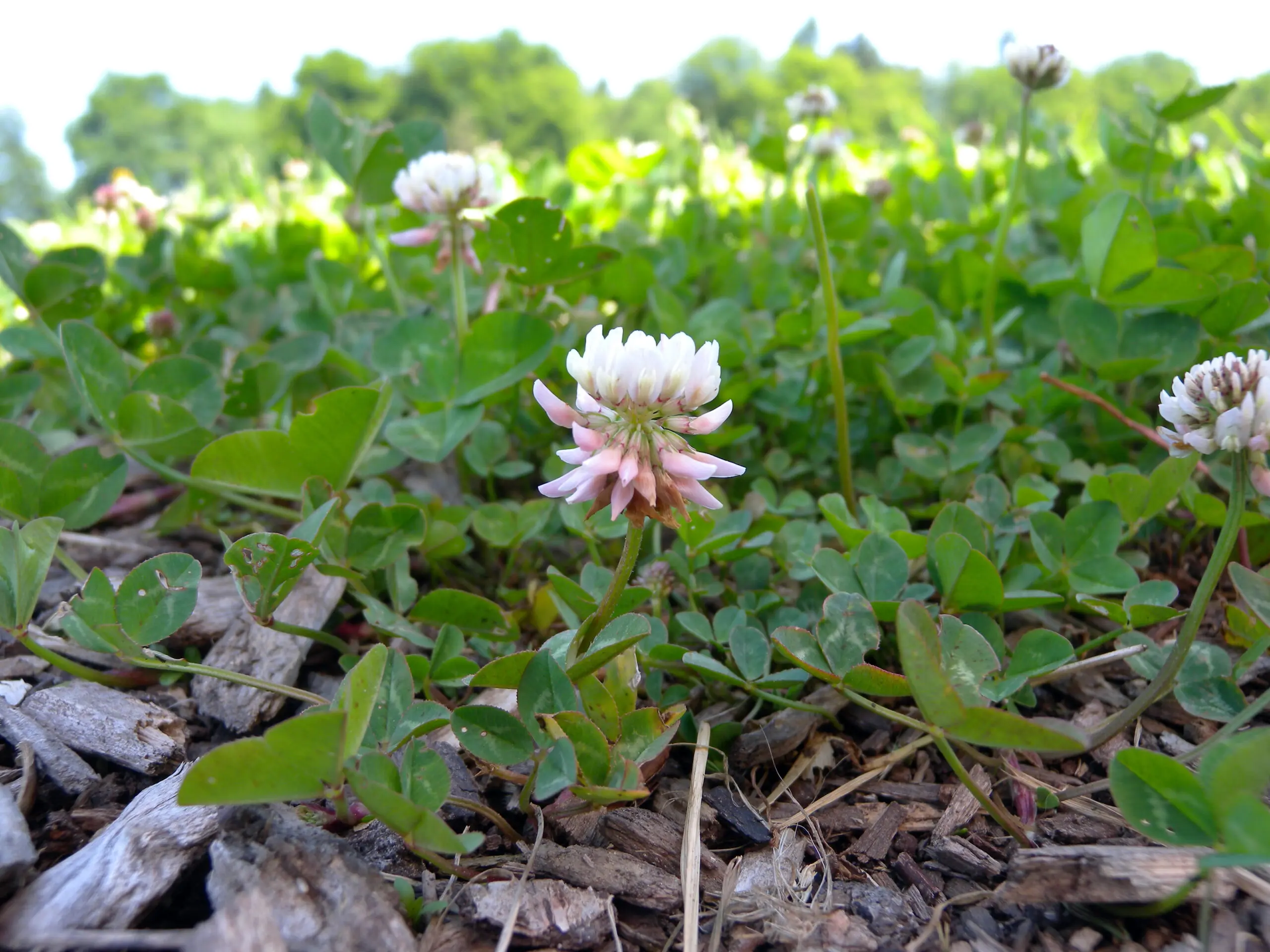
Bluebonnet is just the front of a longer run. The March pollen sets a colony up for the mesquite flow in April and May. The white clover runs right alongside the mesquite. When one yard pulls ahead of another by early summer, it usually traces back to forage stacked like that. One bloom hands off to the next, instead of everything landing at once and quitting.
What you get back is a stronger colony, the extra foragers that March pollen carries into your May and June flows. For a plant that costs nothing and only asks that you leave it standing, that’s a fair trade.
If your land already carries forage like this, it’s halfway to keeping bees. Hosting managed hives is how a lot of Central Texas landowners put it to work. For many, that includes earning an agricultural valuation on the place. See how we work with landowners. The Central Texas wildflower library maps the rest of the year’s blooms, late winter through fall. It says what each one is worth to a hive.
Every hive we manage is held to a written standard: hygienic behavior, varroa resistance, queen veracity, and performance in Central Texas conditions. Genetics that don't hold up get replaced — not propped up.
Read Our Standards