Forage
Goldenrod and Bees in Central Texas
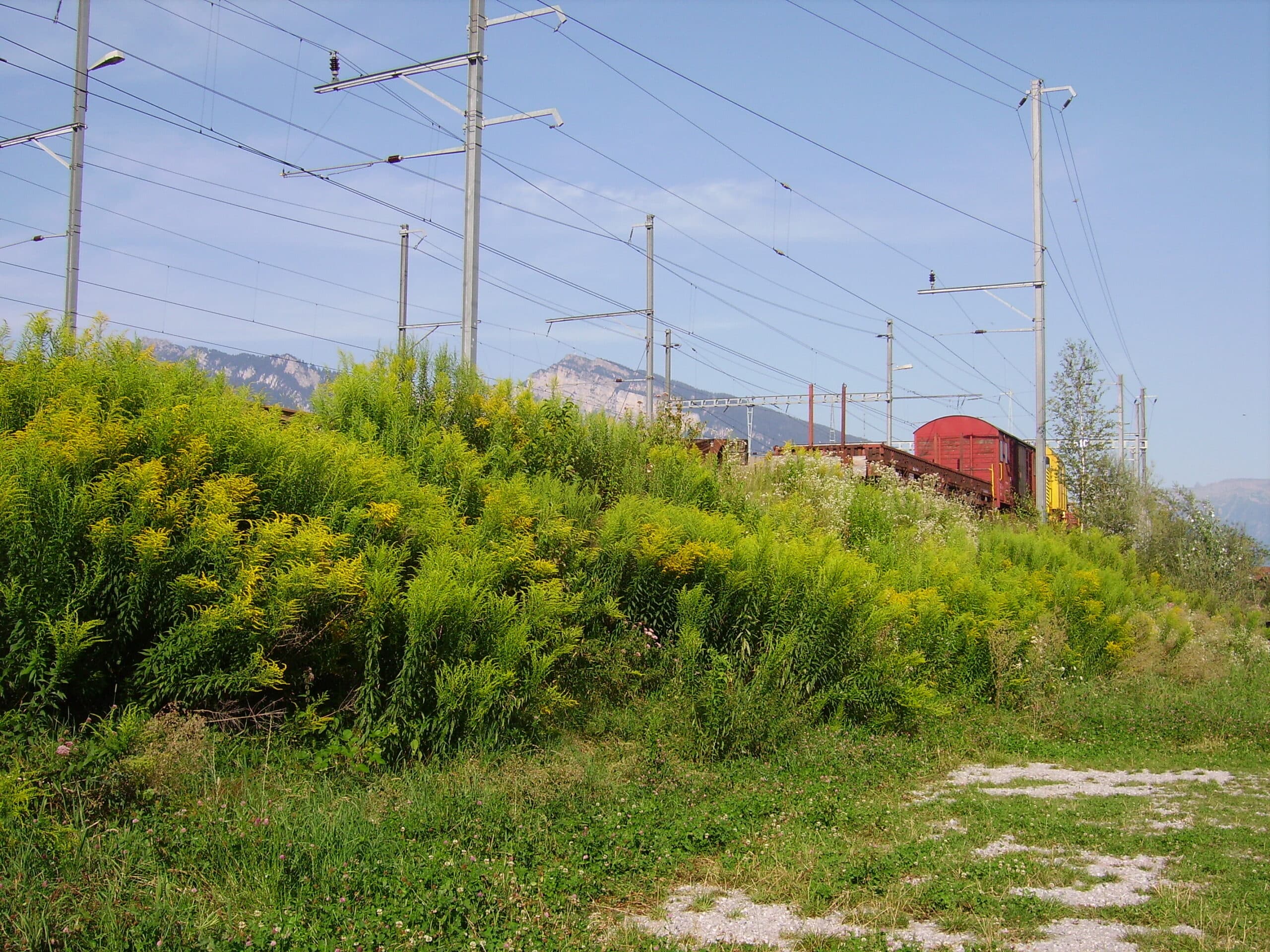
Goldenrod is among the last and heaviest flows of the Central Texas fall. Its dense late pollen builds the winter bees that carry a colony to spring, and we leave the honey on as winter feed.
In February, when most of the Hill Country is still winter-brown, Texas mountain laurel opens its dense purple flower clusters and the bees find them fast. You catch the scent of the bloom before you see it, grape and bubblegum, carrying thirty yards on a warm afternoon. It’s one of the earliest native blooms of the year, and the bees work it. What they take off it is early forage, the kind that helps a colony rebuild after winter, weeks ahead of the big spring flows.
Mountain laurel is a legume, a member of the pea family, and it’s one of the few things blooming in Central Texas in late February. Its flowers draw insect pollinators, and honey bees are among them. For a hive it’s a modest source, well short of what the big spring flows bring in. Bees work it because it’s early and it’s there, in the weeks when the land offers little else.
In late February a colony can’t be choosy. Almost nothing else is open, so the bees work what they can reach. Come May, with forage all over the Hill Country, they’d pass a bloom this small by. In the lean weeks they don’t have that option, and mountain laurel is there.
Texas mountain laurel won’t fill a super. It blooms when almost nothing else does, and the bees working it in that lean stretch build the strength a colony carries into the flows that pay.
A Central Texas colony comes out of winter at its lowest point of the year. The winter slowdown has thinned the forager force, and whatever pollen was stored is running down. It won’t climb back out of that without forage coming in the door. Even a light haul keeps the bees flying and gets the queen building again. Brood she starts now becomes the foragers that work the April and May flows.
Mountain laurel blooms February through April, filling the stretch between winter’s end and the first big spring flows. Mesquite comes on from March into May. A colony that reaches that flow with a strong, growing population takes far more off it than one that idled through late winter. Where mountain laurel grows within range of a yard, the hives get that head start.
A hive building in February shows it in light forage coming in and a brood nest that’s starting to spread, with the winter cluster loosening on its own schedule as the days warm. That’s what you want to see this time of year.
The trap is reading that healthy buildup as a colony falling behind, then cracking it open to fix a problem that isn’t there. In February, check the brood pattern and whether forage is coming in. If both are headed the right way, close it up and leave it alone. You won’t find mountain laurel in the honey harvest. You’ll find it in the colony strength that produces one.
Texas mountain laurel sets semi-woody pods full of bright red seeds, and those seeds carry cytisine, an alkaloid that’s poisonous to people and pets. Children and animals shouldn’t have unsupervised access to the fallen pods.
For the bees, it’s simpler. The cytisine stays in the seeds. There’s no documented case of the blooms poisoning a colony or tainting its honey. The toxic-honey stories you might have heard trace to a different plant that only shares the name, the eastern mountain laurel (Kalmia latifolia), an unrelated species that carries grayanotoxin in its nectar. Deal with the pods around children, and let the bees have the flowers.
Dermatophyllum secundiflorum is native to south and central Texas, on into the mountains of southern New Mexico and northern Mexico. In Texas it grows on brushy limestone slopes, canyon edges, and rocky open ground over caliche and calcareous soil. It’s an evergreen, sometimes a multi-trunked shrub and sometimes a small tree, with glossy, leathery leaves made up of seven to nine leaflets. It wants good drainage, and it does best in the high-pH limestone soils that define so much of the region. Once it’s established it shrugs off drought, which is a good part of why it holds up across the Hill Country and the Edwards Plateau. Through summer and into fall it carries semi-woody seedpods, each holding a row of bright red seeds, the ones that carry the cytisine.
That limestone country is the same ground most Central Texas apiary sites sit on. On a hosted property in Comal, Hays, Blanco, or Burnet County, mountain laurel is often already there, on a rocky outcrop or set in as a landscape planting years back. You don’t have to plant it. You just have to know it’s there and count it in the forage calendar.
Texas A&M AgriLife named mountain laurel a Texas Superstar in March 2026, citing its drought tolerance and reliable performance across the state. For the full bloom period, native range, and pollinator detail, see the Lady Bird Johnson Wildflower Center profile of Dermatophyllum secundiflorum.
Bloom season: February through April. It usually opens ahead of the bluebonnets.
Forage value for honey bees: Modest, early-season forage. The blooms draw a range of insect pollinators, and honey bees work them in late winter when little else is open. Useful mainly because it blooms so early.
Native status: Native evergreen shrub or small tree, Dermatophyllum secundiflorum, Fabaceae. Formerly Sophora secundiflora.
Mountain laurel usually opens before the bluebonnets, one in February and the other coming on through March. Huisache runs earlier than either, blooming in January, and behind all three come mesquite and horsemint. Mountain laurel blooms in the weeks when a colony would otherwise have almost nothing to work at all.
The bluebonnets follow mountain laurel in the spring calendar, another early native the bees work before the main flows open.
The whole run, plant by plant and month by month, is mapped in the Central Texas wildflower library.
If you’ve got mountain laurel on your land, it’s one piece of a forage calendar that can make a place worth keeping bees on. A property that carries native bloom from late winter into fall keeps its colonies fed through the gaps between the big flows. Knowing what each native plant gives a hive across the season is the whole idea behind how we work with landowners.
Every hive we manage is held to a written standard: hygienic behavior, varroa resistance, queen veracity, and performance in Central Texas conditions. Genetics that don't hold up get replaced — not propped up.
Read Our Standards